“I’ll sleep when I’m dead,” is a widely understood refrain to emphasize the value of hard work over rest. Even if not openly stated, the expectation for people to maximize their work time is ingrained in American culture. According to Pew Research Center, 46% of workers take less time off than they are allowed. Around 49% of workers mentioned they had concerns about falling behind on work if they take time off and 12% say that their manager or supervisor discourages them from taking time off. This focus on work takes time away from other facets of life like spending time with friends and family, having hobbies, and recuperating through sleep.
Sleep is a routine part of the human experience; the National Institutes of Health stated that people spend about a third of their life either sleeping or trying to do so. But sleep doesn’t reach everyone equally; Black Americans are five times more likely to get less than six hours of sleep a night (also called ‘short sleep’) according to érudit. This sleep gap exacerbates the risk of health issues like cardiovascular disease, which are further compounded by systemic inequalities. Mia Imani, a spiritual technologist and speculative architect, creates installation work that focuses on addressing this disparity and speculating the future of dreaming, along with many other rich topics.
Introducing Mia Imani
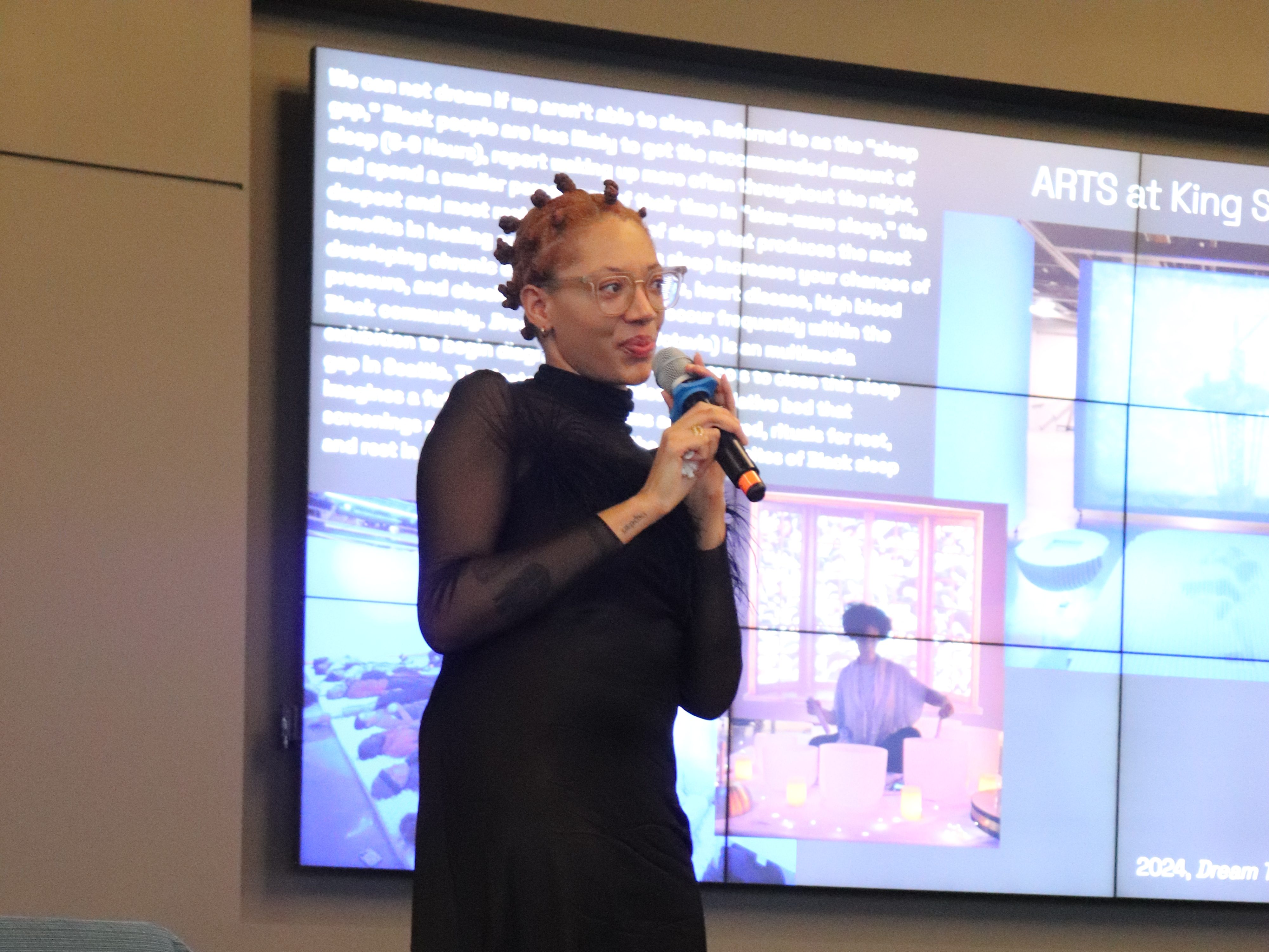
Mia Imani is a UW Bothell alumnus who graduated from the Media & Communication Studies Bachelor of Arts program. She spoke about being interested in art from a young age, growing up in a household where music was commonly heard and art pieces decorated her surroundings. She took art classes throughout her early school days from kindergarten to high school. In high school, she took visual and performing art classes, as well as joined the school newspaper which helped shape her passion in journalism and hearing the stories of Black, Indigenous and People of Color (BIPOC).
“…maybe the baseline of where I was at is like, ‘Oh, I want to hear people’s stories.’ And I want to understand, especially for BIPOC folks, how we’ve arrived at what we’ve done and how we’ve been able to create our dreams or render our dreams true even through obstacles. Like that’s truly where my practice began,” Mia Imani shared.
After high school, she attended Seattle University, but decided to leave school and make a living for herself in Seattle. Mia Imani found a community for herself living in the city, and built a community of friends and creatives; she mentioned, “And truly, in that — being in that community of other people of color, of other queer people who were all trying to kind of make something for themselves in a place that didn’t necessarily see us, was what inspired me to actually go back to school.”
Mia Imani chose to go to UW Bothell because she was interested in a local school with an interdisciplinary program, which would provide her opportunities to explore journalism and art through different mediums. One course that shaped her experience was an introductory class to interdisciplinary arts that made her realize the possibility of becoming an artist who translated their experiences into a creative medium, to help bridge knowledge gaps for communities who experience barriers to accessing certain types of knowledge. Additionally, Mia Imani mentioned wanting to uplift knowledges and experiences that aren’t always valued by institutions. She also spoke about the various classes she took, for example a Black Marxism class with Dr. Jed Murr, introduced her to a rich history of Black literaries and made her consider incorporating those writings into her work. “…what would it mean to create a — kind of like a pipeline for me to process things and externalize them, and to have it also reflect my own experience.”
Another invaluable part of her college experience was studying abroad in Rome and in other European countries. Mia Imani spoke about how she had a fulfilling college experience due to her dedication to pursuing what brings her joy. She mentioned she tries to, “find ways to kind of fold in experiences into my passions.” Experiences like being part of Student Media, connecting with professors, and studying abroad guided her multidisciplinary work and journey after graduation.
Mia Imani moved to Berlin after graduating in 2018 to pursue art since she saw it as a viable pathway in Germany. After living there for three years, she headed for sunnier skies and moved to Los Angeles. She spoke about how her grandmother moved to LA by herself when she was 19 so living there was a way of honoring her legacy. As part of a full circle journey, Mia Imani briefly returned to UWB to share her work through RESTidency: The Dreaming Room. She wanted to return to campus to inspire budding artists and students to recognize, “It’s not just about taking this class to get the credit. Whatever you’re learning in these classes, you can actually apply to your normal life, and it could help you at least pursue your goals — but could truly be an infrastructure that helps you define your practice as time goes.”
Relaxation and Realizations in the RESTidency: The Dreaming Room
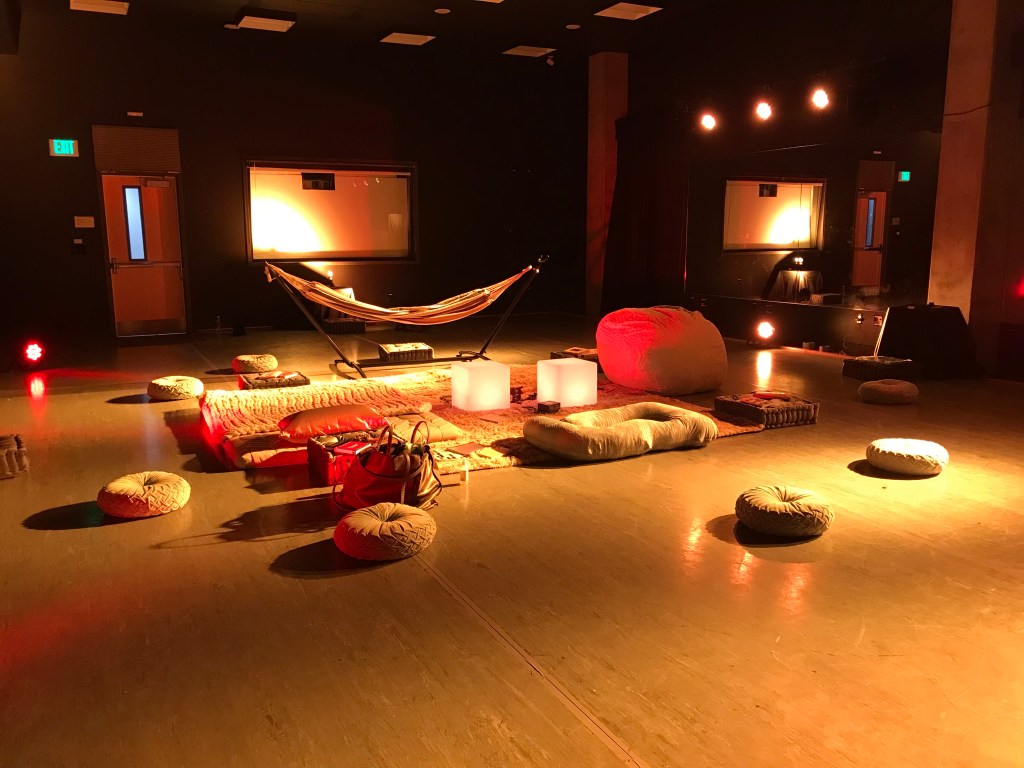
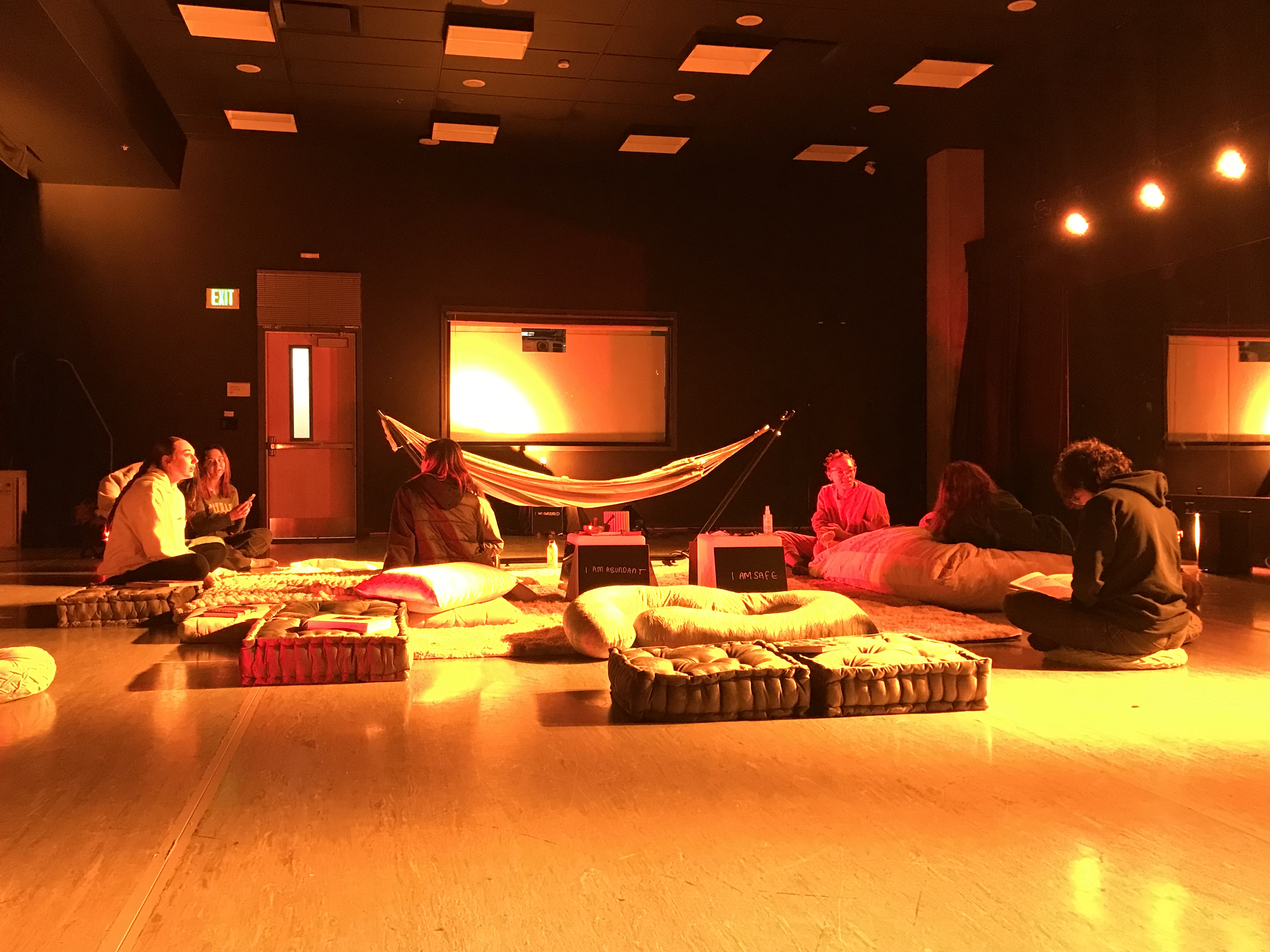
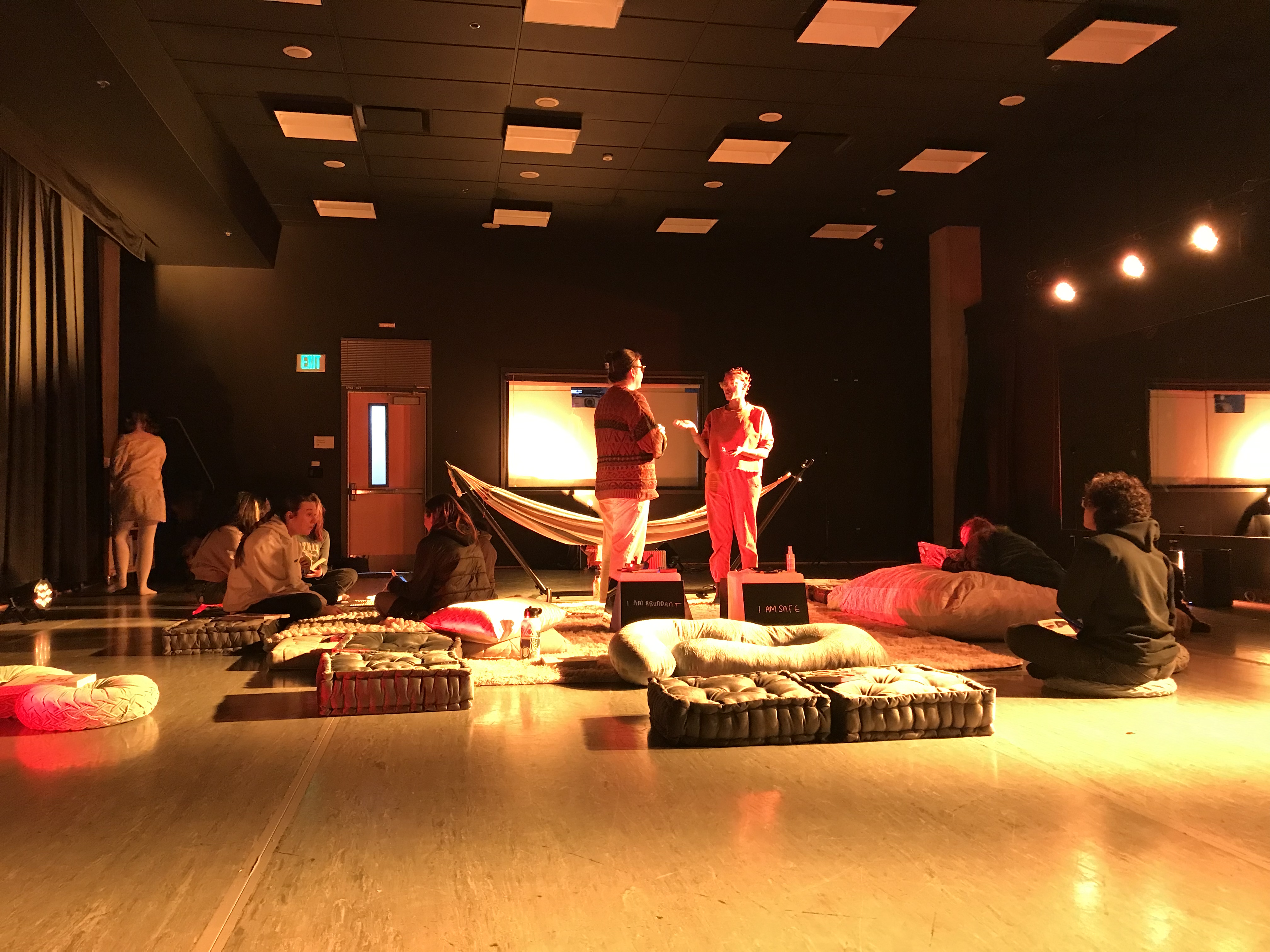
Mia Imani described The Dreaming Room as, “a speculative project that imagines a world where institutions like a university would actually care and value the sleep of students, where your rest and your ability to repair is just as important as your ability to have outputs.”
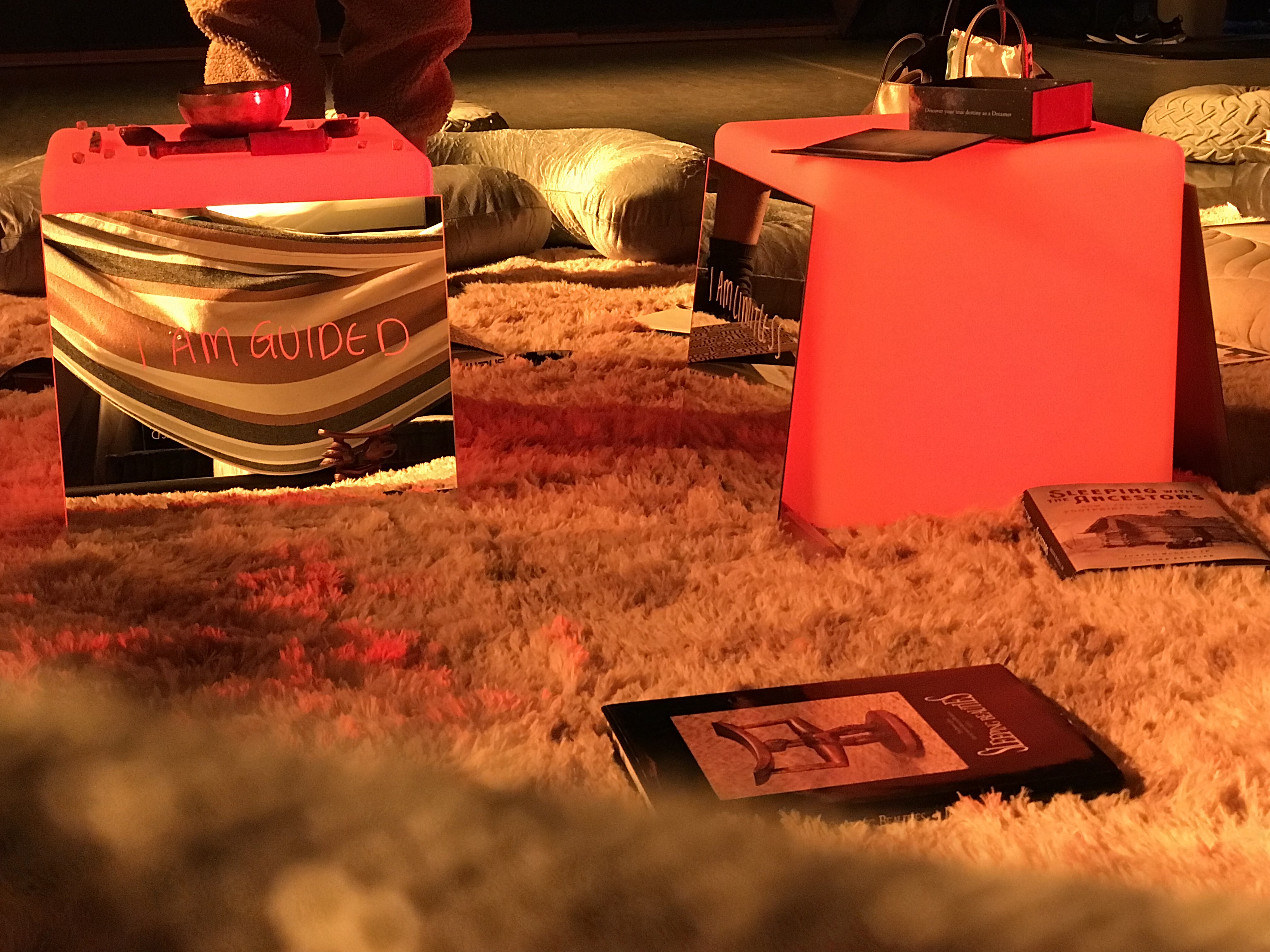
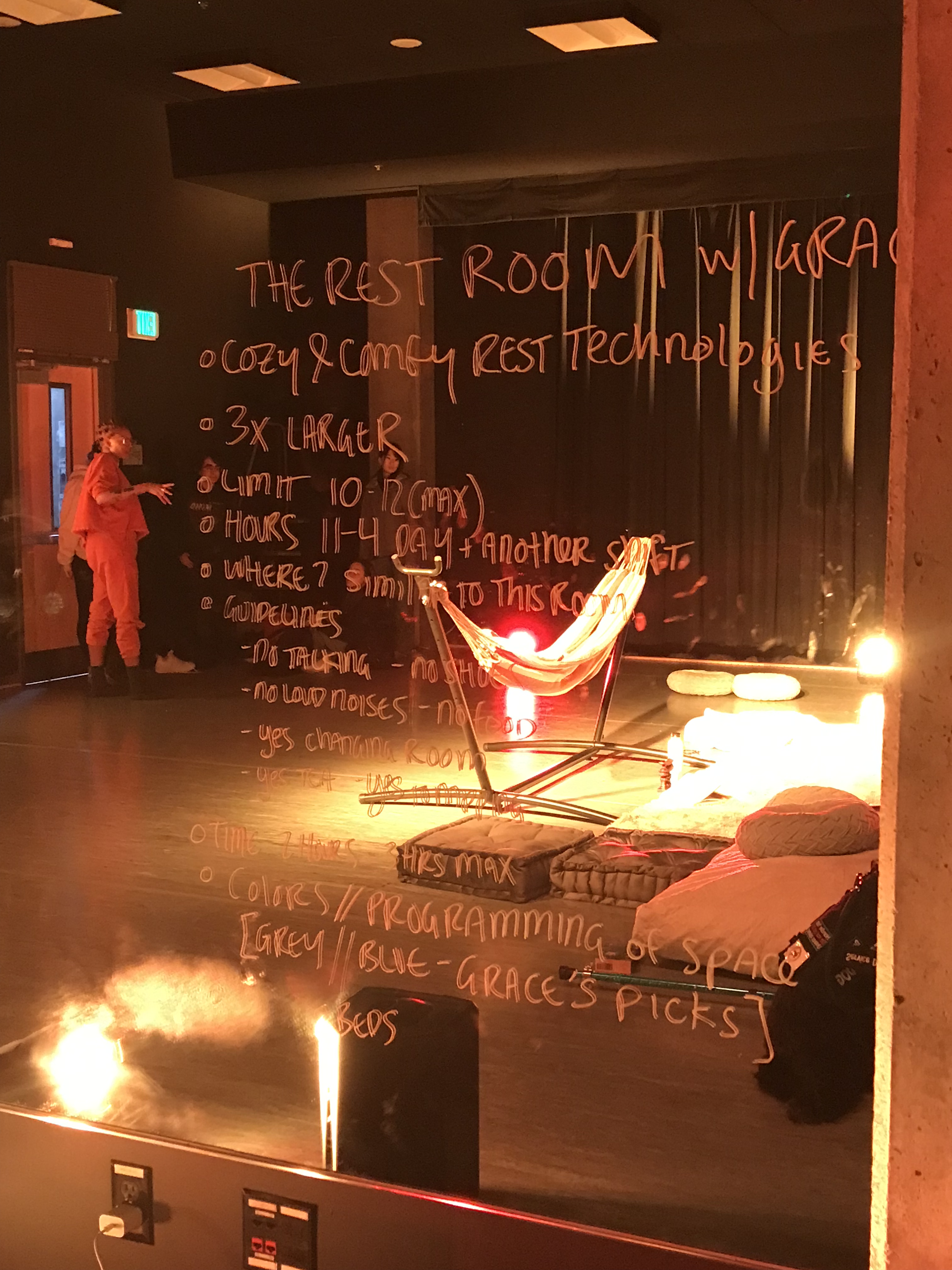
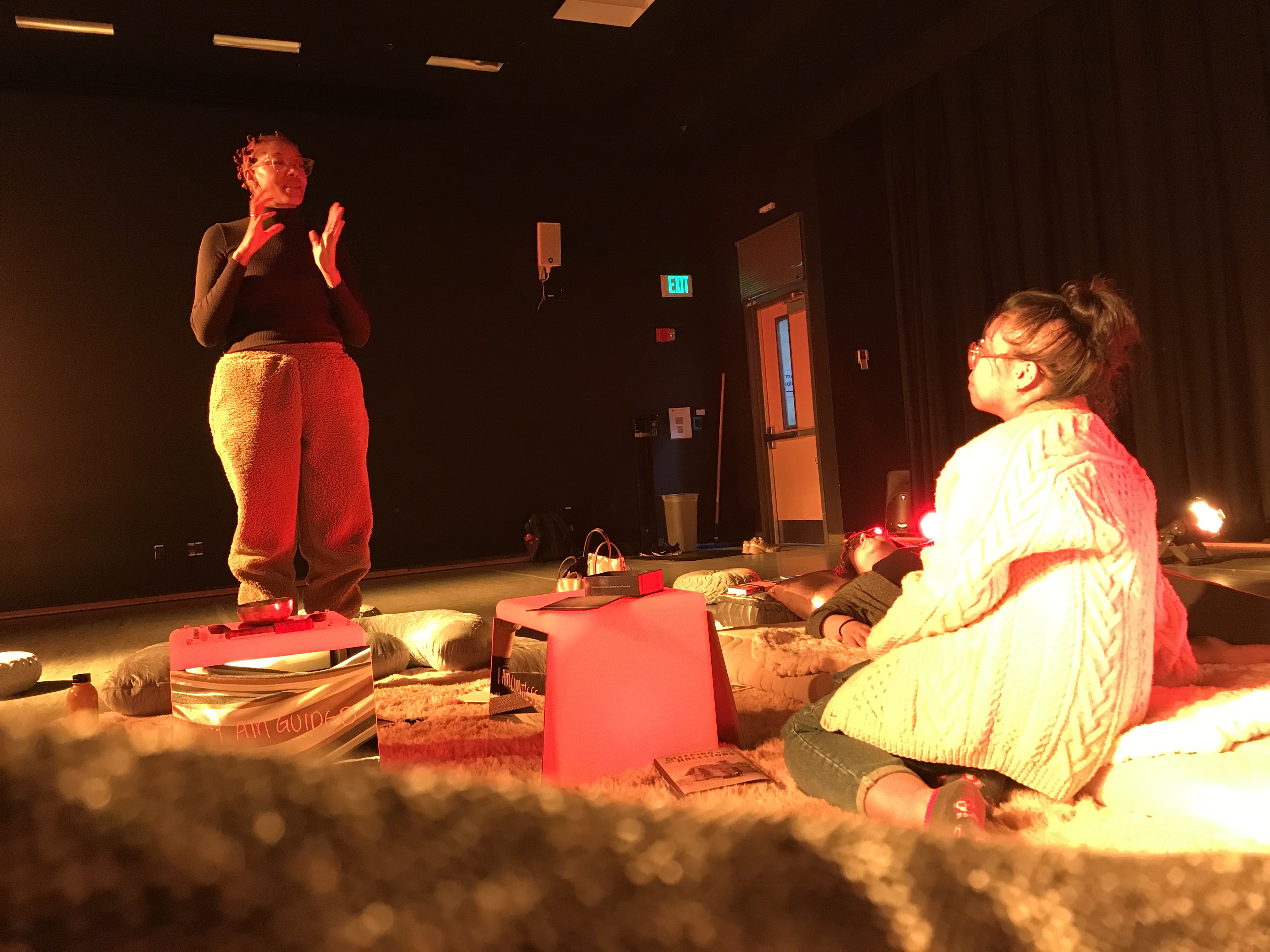
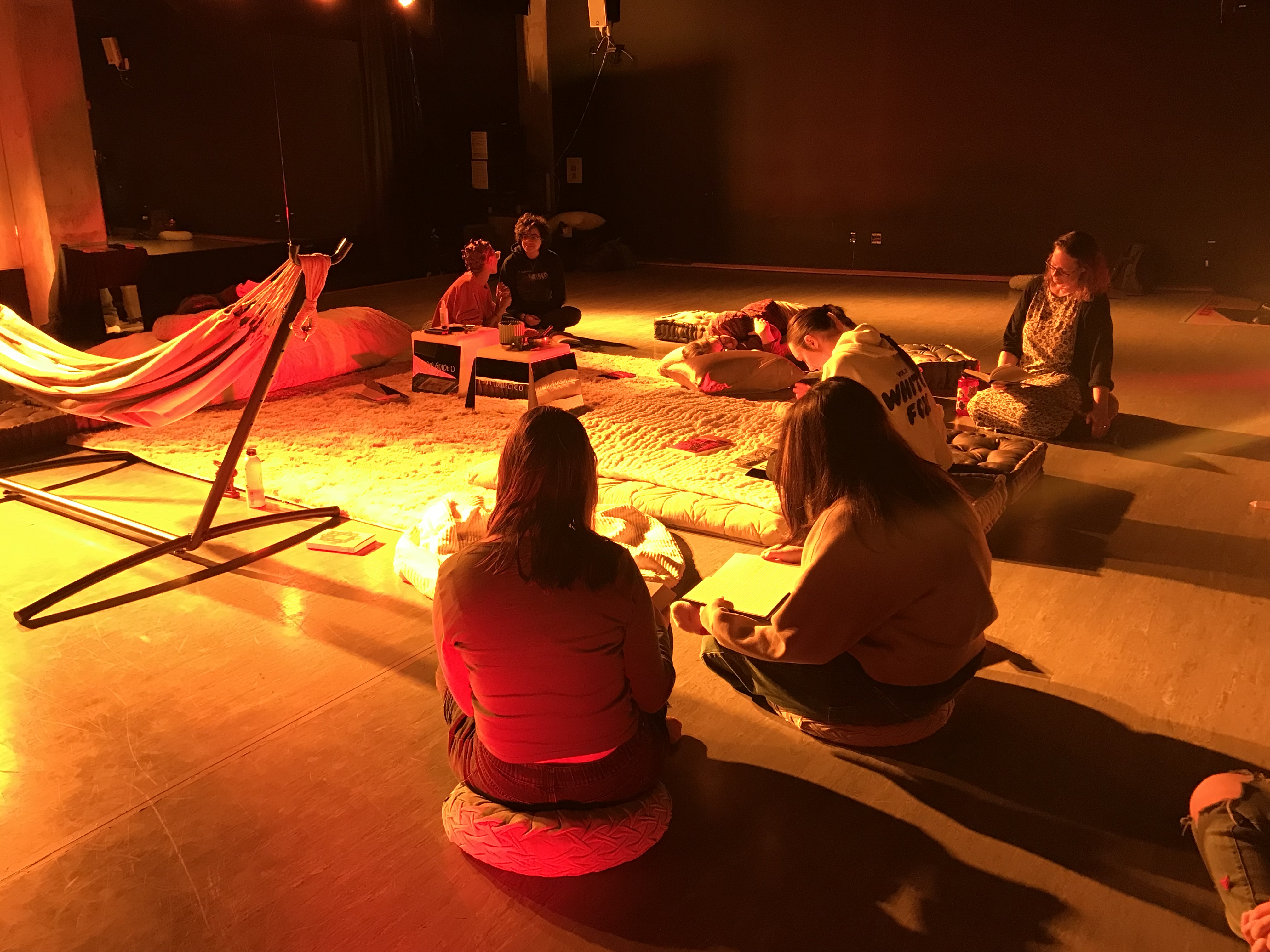
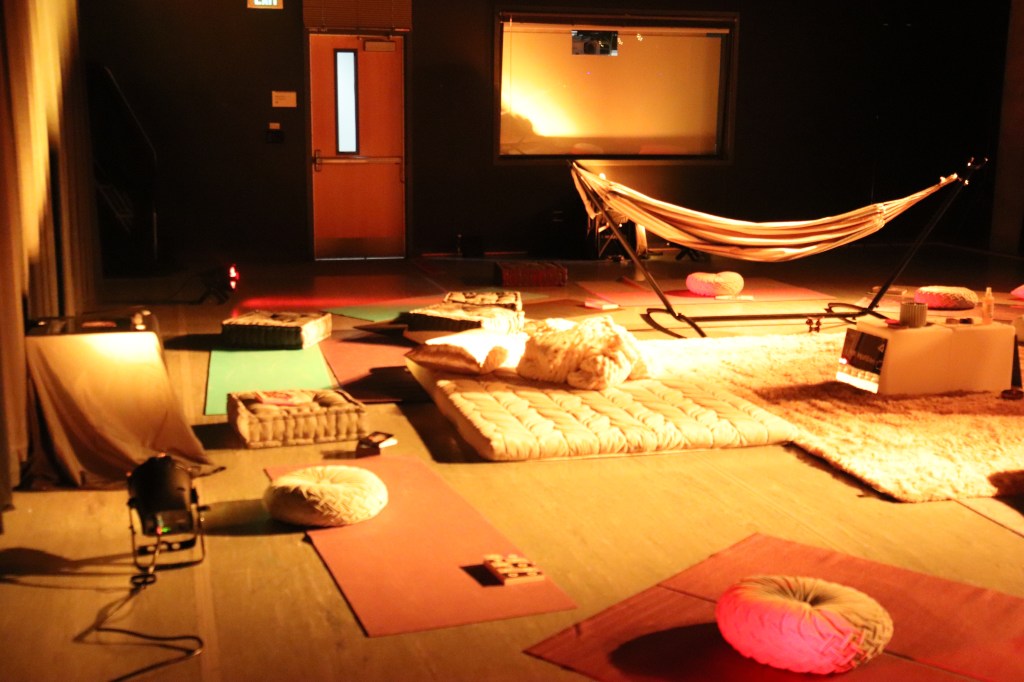
The Room provided a space on campus for students to have reparative rest, to learn more about global sleep technologies, and discuss their own habits in relation to rest. In each of the four cardinal directions, there was a cultural form of sleeping technology. There was a floor mattress from Japan to the east and a beanbag chair to the west, which Mia Imani joked matched the ‘extraness’ of Americans. To the south, there was a replica of a Congolese headrest, as well as a hammock to represent the feeling of being held by a caring figure, and in the north, there was a maternity pillow for body support. Additionally, yellow and red lights casted a warm orange glow to set a relaxing atmosphere and also helped to combat blue light exposure that people regularly face due to technology use.
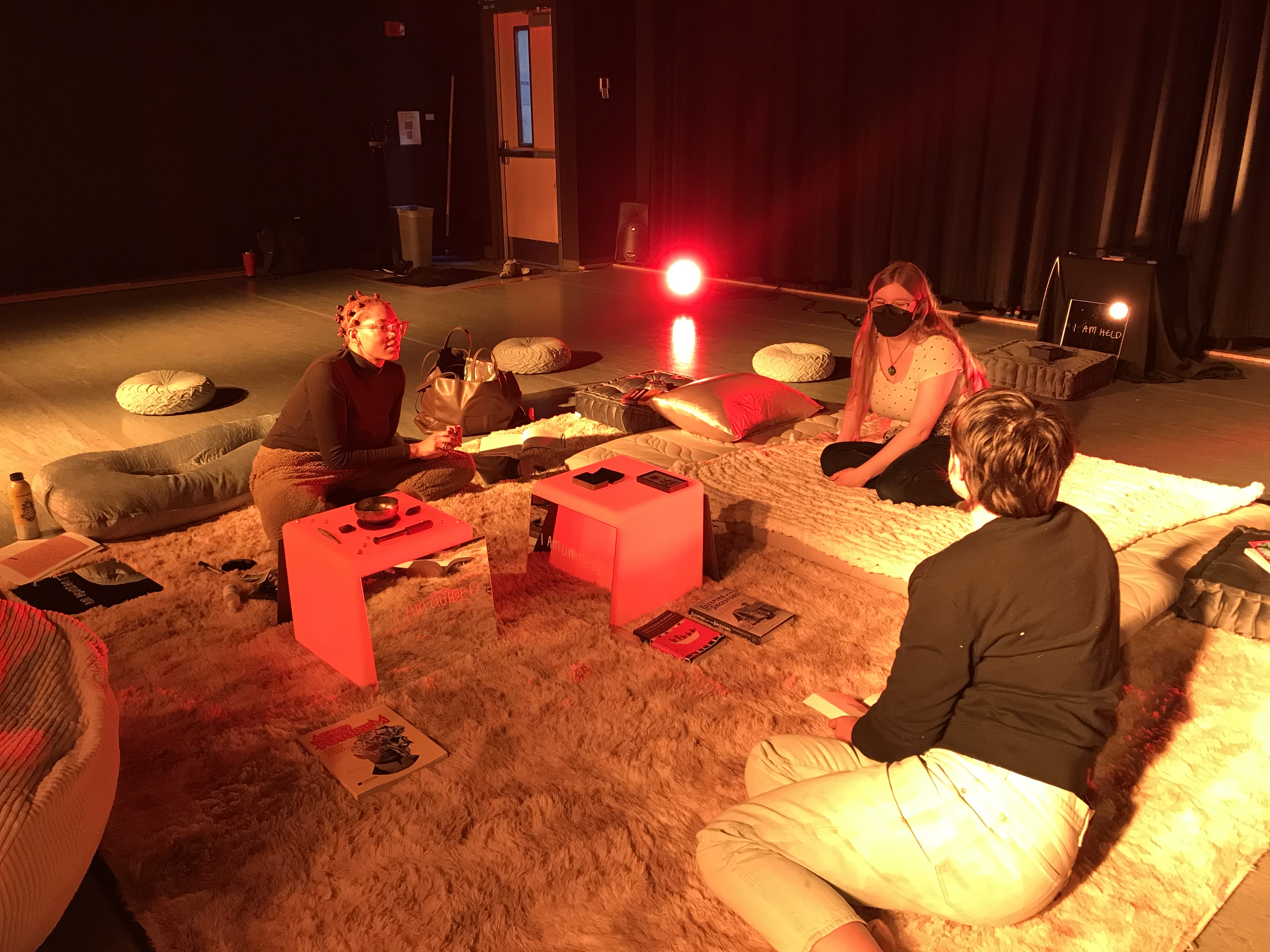
In conversations with different students, Mia Imani discussed the importance of reparative spaces not only on campus, but within the broader American society, which prioritizes productivity over well-being. She shared that finals week is often casually referred to as “Dead Week” in university. During this time, students may sacrifice their well-being and other facets of their life to fulfill societal needs and expectations. She spoke about the potential of an ideal society where people are able to rest and have their needs met to break harmful habits.
“…in order for us to heal, we also have to see things like sleep as a public health issue. It’s not an isolated issue, it’s not an individual issue. It requires us to confront our inherited cultures around what is deemed worthy of rest or not. For instance, living in the US, it’s like, ‘I’ll sleep when I’m dead.’ ‘Time is money.’ You have idioms like this, and then you also have a lot of connotations that are correlated to racialized identity,” Mia Imani noted.
She also spoke about how college is a primer for the “adult world” for many students. When sleep and rest aren’t valued — or even rewarded, students will internalize that message and not see rest as something important when they enter the workforce. “This project is actively trying to undo that, and actively trying to remind people that there is such worth and value and not doing. And there is so much worth and value in yourself in just solely being in space, with no intended output or product,” said Mia Imani.


Images by Mya Vo
Throughout the days that The Dreaming Room was open, students trickled in to visit, whether with their classes or wandering in due to interest in the warm lighting peeking through the windows. Mia Imani mentioned that over 100 students visited and the room was a place of respite where students rested, snored, and inquired what a more permanent resting room on campus might be like. As she spoke with students, Mia Imani shared the facets of her work, which involve learning about global sleep cultures, researching sleep technologies and creating installations centered around the idea of radical rest.
Delving into Radical Rest
On Thursday, Feb. 27, Mia Imani had an Artist Talk and Q&A with Professor Naomi Bragin at the ARC Overlook. They had an open ended discussion about her inspirations for work, past projects that led her to the RESTidency, and gave thoughtful answers to student questions. Watch the full discussion below:
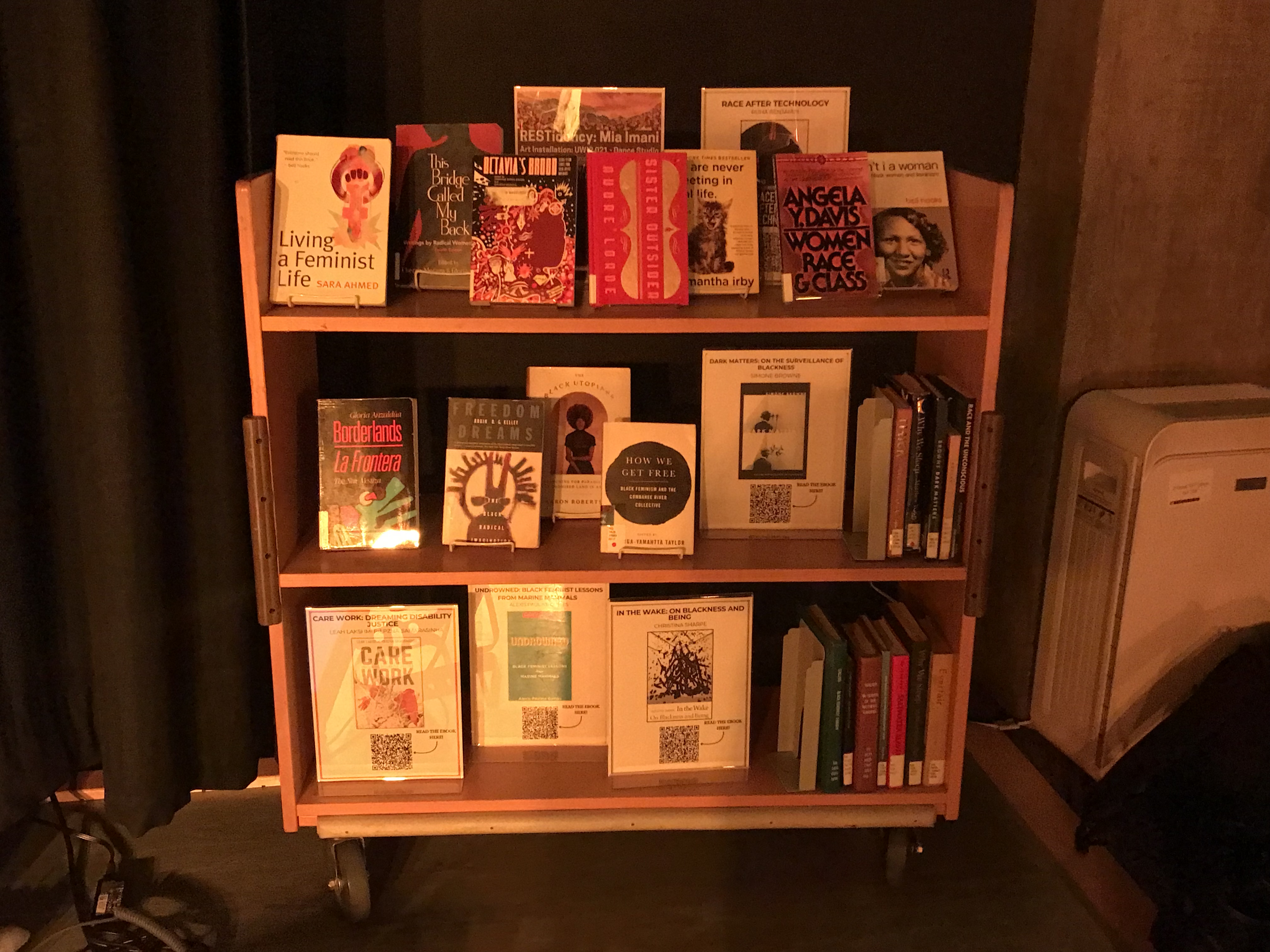
Mia Imani’s work is inspired by a rich tapestry of work from Black women literaries like Octavia Butler and Toni Morrison, as well as scholars like Tricia Hersey who founded The Nap Ministry and coined the term “rest as resistance.” Mia Imani emphasized her work’s philosophical focus on Radical Rest, which according to érudit is “a Black femme and queer-led social movement that focuses on restorative practices and experimental spaces that aim to close the “sleep gap” within the Black Diaspora.” The Dreaming Room installation was designed to challenge the norm of constant productivity at universities as institutions enforce a culture where students, staff, and faculty aren’t able to get rest.
According to Psychology Today, toxic productivity is defined as an obsession with constantly needing to be productive, regardless of results or the effects on one’s health. This can happen on a personal, cultural and societal level. The need to prove oneself through productivity is especially prevalent for minorities; a study revealed that Black youth from eighth to eleventh grade practice high-effort coping to buffer against racial discrimination from their teachers which affects their mental health.
Spaces like The Dreaming Room are invaluable in creating a space for everyone, but particularly marginalized groups to have respite and recognize how society alienates people through toxic productivity. Augusto Boal, author of “Theatre of the Oppressed,” established the term “de-mechanization” to break down the way society conditions people to understand and interact with the world. Mia Imani’s work is a form of de-mechanization that inspires conversation, as well as invites communities to imagine and collectively work towards a society that supports the people within it.
A Coda to RESTidency
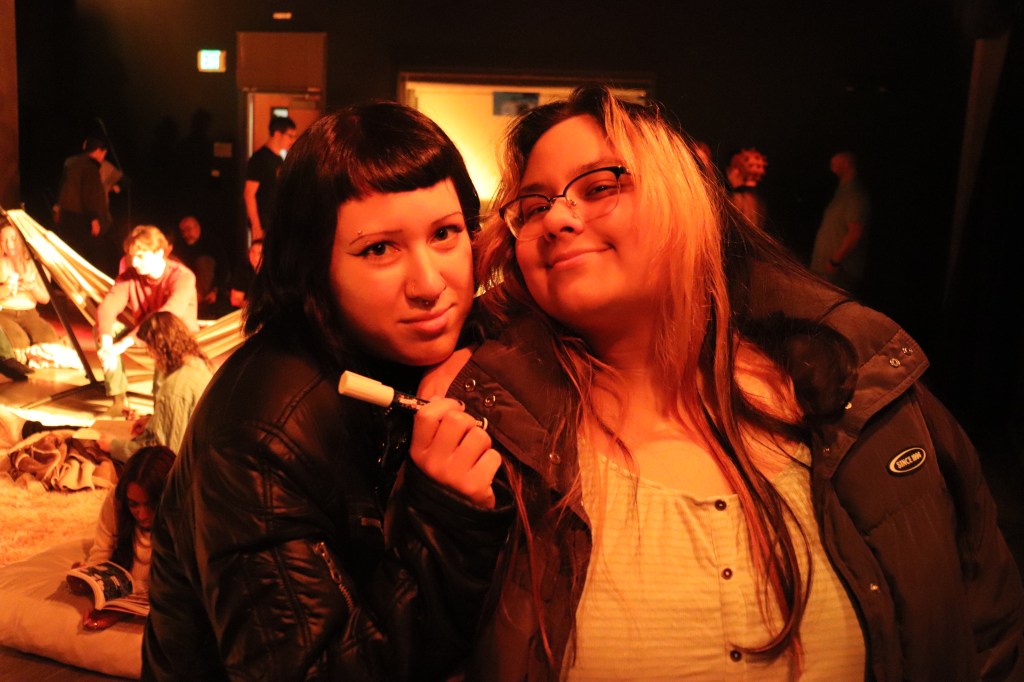
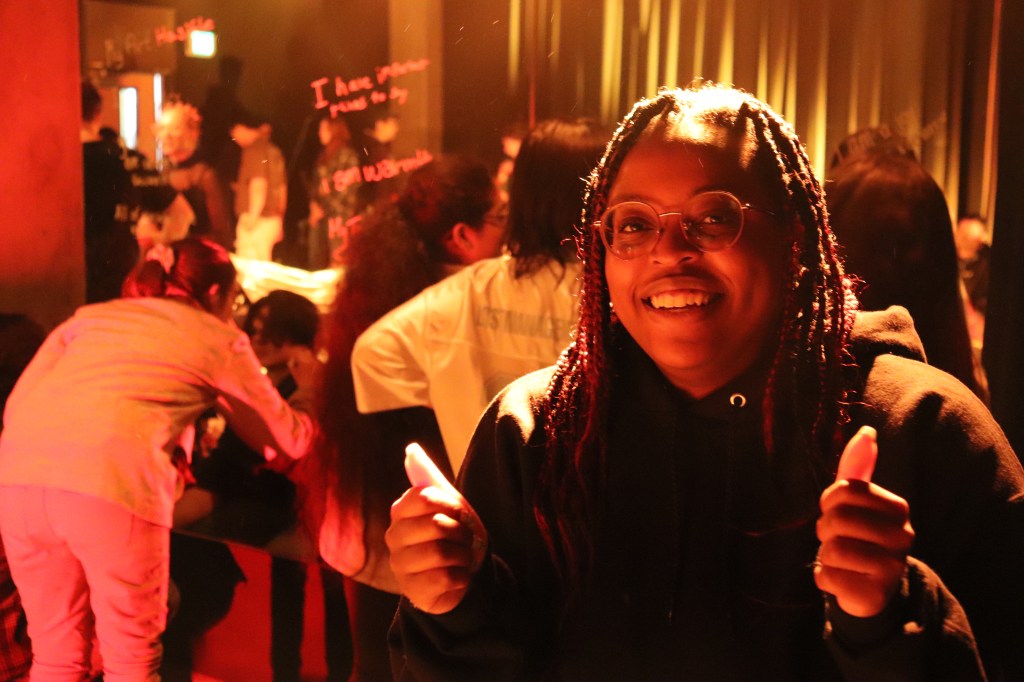
After Mia Imani’s conversation with Bragin and their audience, there was a procession back to the Dreaming Room where a dream seeding ritual occurred and students planted their hopes for dreams they would receive. As part of a final note, visitors wrote affirmations for themselves and those they cared about on the dance room mirrors to reflect their manifestations.

the camera (Image by Christina Scott)
thumbs up (Image by Christina Scott)
As students enjoyed the dreamy space for the last time, the impact of the space will linger as visitors engage with rest in their own lives in a different way. In the artist talk, Mia Imani shared how she is part of a larger legacy and that everyone should take pride in their respective journeys. “…I don’t know about y’all, but I know that I’m a great, great, great, great grandmother is a dream. And to know that it takes so much to be here in the seats that you’re in today, you should be proud of yourself. And in that being proud and in knowing the responsibility it means to do something when you see something,” she said.
Mia Imani is passionate about using artistic methods and methodologies to design a world that she wants to be a part of, one that values the rest of everyone that is a part of it.
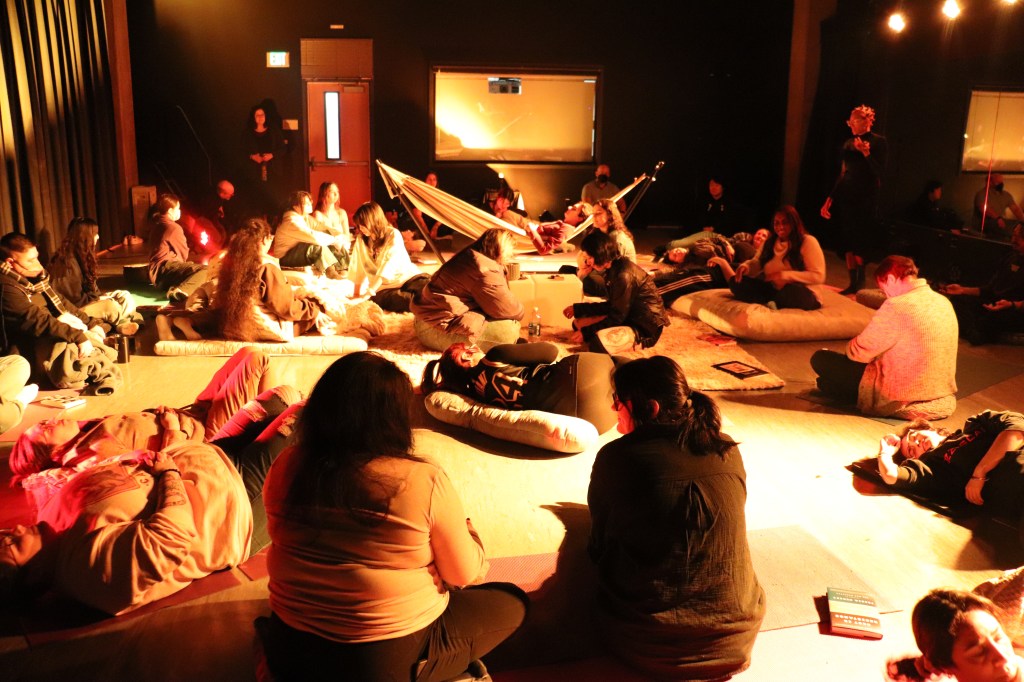
for the last time (Image by Christina Scott)
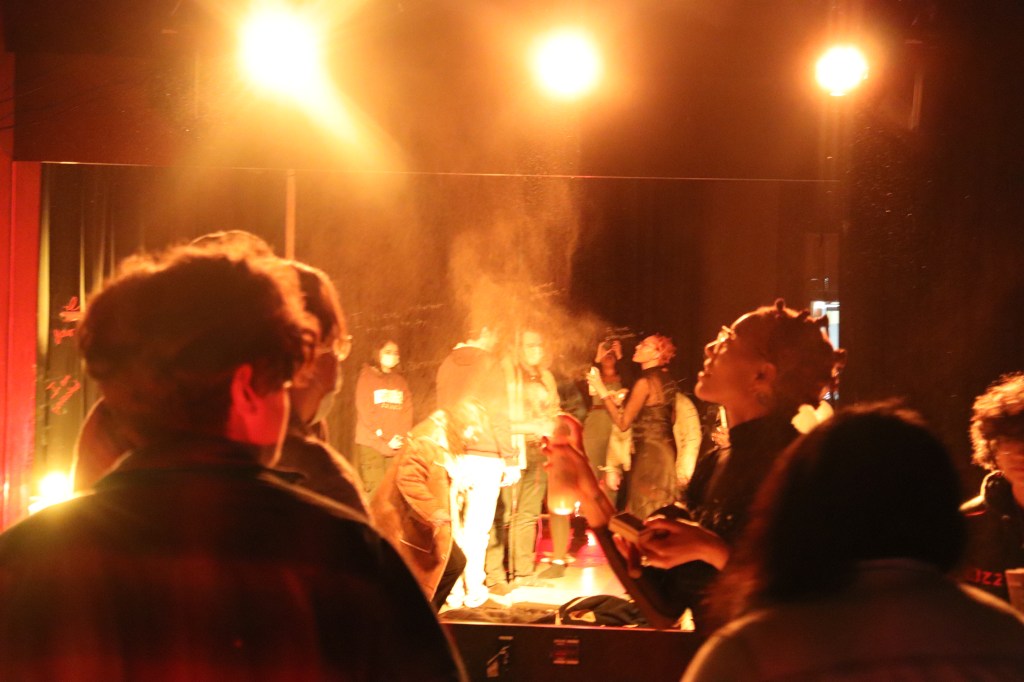
(Image by Christina Scott)
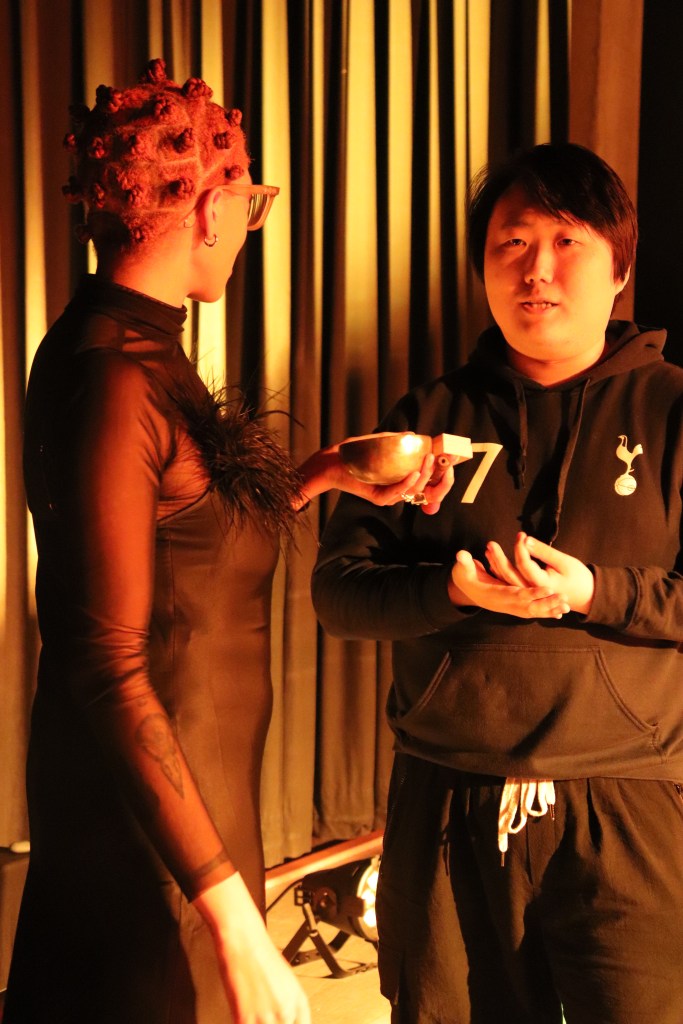
(Image by Christina Scott)

(Image by Christina Scott)
While the RESTidency space has physically closed, the idea of a future where universities prize the rest of people that study, work and live there doesn’t have to. Whether it is mobile and temporary or a permanent fixture on campus, The Husky Herald is curious to know about student opinions about a resting room on campus; please fill out the survey if you’d like to share your experiences and thoughts! https://forms.office.com/r/6AVUU6rgF3
 The Husky Herald