
Written by: Natalia Kukolja, Sarah Mellor, Leena Peerzada, Hibaaq Abdi

BOTHELL, WA – Aramark monopolizes Bothell Dining’s decision-making power as students at UW Bothell remain in the dark about the ecological and ethical repercussions of contracting with the giant transnational corporation.
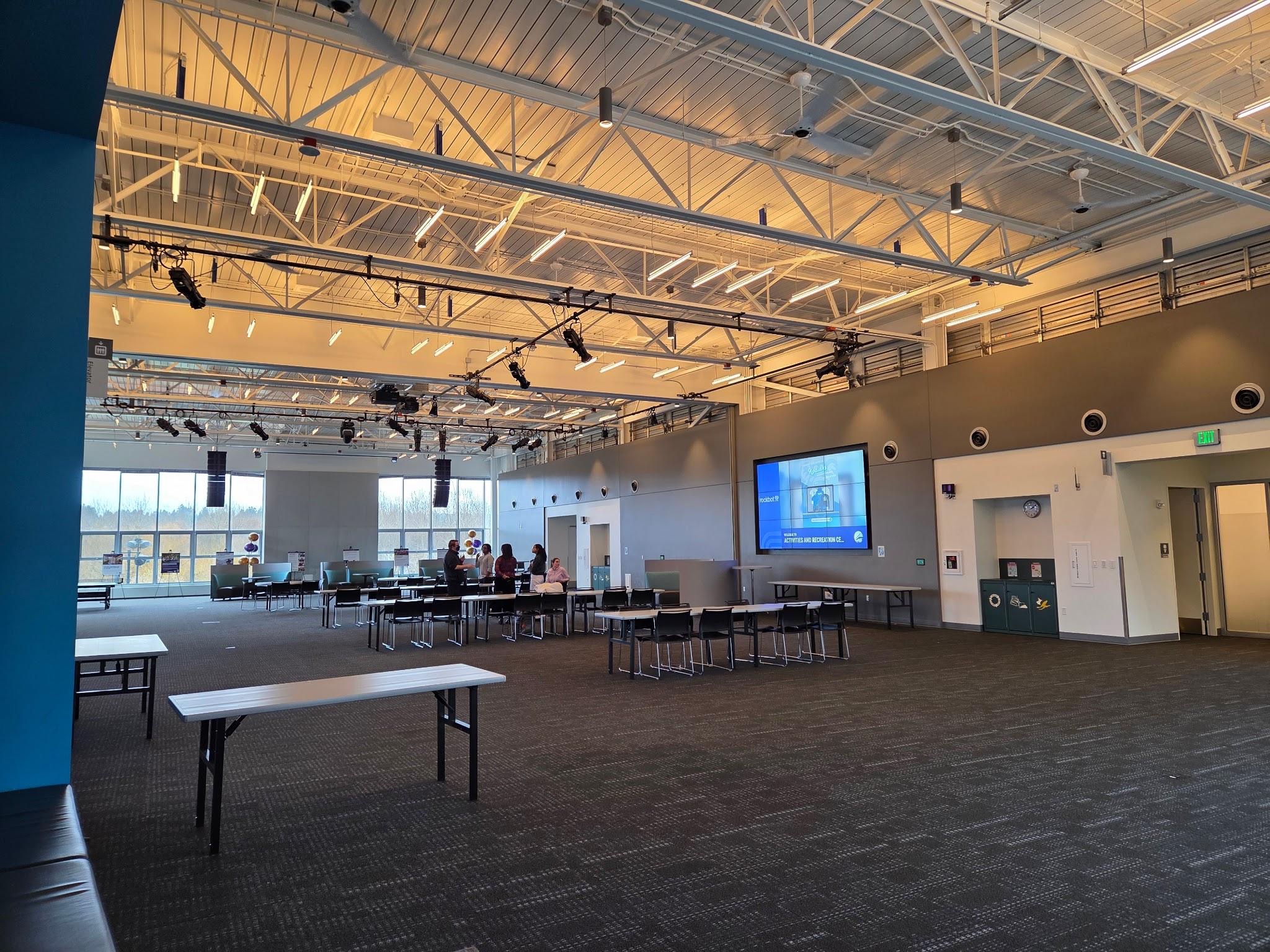
UWB has a positive reputation for achievements in sustainability innovation. In 2022, UWB received the Excellence & Innovation Award for Sustainability and Sustainable Development from the American Association of State Colleges and Universities. UWB also hosts events related to sustainability initiatives. A Sustainability Action Plan Visioning Session was held in the ARC Overlook on Feb. 26 that was aimed towards encouraging the community voices to speak about sustainability. Interested students, staff from the Bothell Parks Department and faculty from UW Seattle appeared eager to speak up on ideas for the continued innovation in sustainability at UWB. With whiteboards set up in each corner of the room, groups gathered around to consider topics such as partnerships, infrastructure and academics.
Yet amid the enthusiasm for change, one crucial topic remained largely unspoken; the impact of UW Bothell’s food service provider, Aramark. The decision to open a dining hall at UWB in 2023 presented a need to find a food service provider. After entering a contract with Aramark, UW Bothell and its students handed over their ability to make independent decisions about what to eat and who to buy it from.

Photo by Amaris Rose
Al Fann, sustainability assistant for the City of Bothell Parks Department, said, “The students wanted a dining hall for a long time, it was a clear need. However when it came down to filling that need, it was impossible for local vendors to have a chance. UWB would only rent the entire space out to one person, which a local vendor can’t afford to do. The bidding war lasted a long time, and Aramark was the only bidder so they got it.” Aramark’s selection as Bothell Dining’s food service provider came from being unopposed due to a prolonged bidding process that was inaccessible to local competitors.
UWB’s Sustainability Action Plan
About every five years, the UWB Office of Sustainability compiles a Sustainability Action Plan with direction from the Chancellor and contributions from staff, including faculty and administration.
The Sustainability Action Plan articulates UWB’s current food, dining, and purchasing sustainability goals of implementing a sustainable purchasing program, increasing sustainable dining options, and also their direction for the future. The plan outlines specific steps to be taken, responsible parties and linkages, future goals, as well as past accomplishments.
Steps taken towards greater sustainability at UWB include upgrading building lights to energy efficient LEDs, having comprehensive composting in each building and adding a system to automatically reduce electricity use in buildings when demand is high. They’ve also implemented green kitchens, offices, and sustainable living guides created and posted around campus.

Photo by Eugene Fong
The dining hall has procedures and routines for waste disposal. There are compost bins and metal utensils placed along the walls on the way out of the eating area at the upstairs pavilion. Downstairs, the Pavilion uses compostable containers and utensils, and has similar waste bins for these to be sorted into and to be composted. Freshman student Dhruv Gupta expressed happiness with the level of sustainability in the dining hall. “It’s been pretty good since day one, so I don’t think they need to change anything,” he said.

Although students and faculty both use food services offered at UWB, students are unaware of the impacts of campus sustainability, trusting that existing measures are satisfactory. Meanwhile, faculty are often not involved within the discussion and decision-making process. Biological sciences Associate Professor Michele Price said that she did not feel that faculty were consulted about sustainability goals or desires. Not all faculty members are informed about ways to participate or make their voices heard, even though the Sustainability Action Plan is contributed to by faculty members. The most recent Sustainability Action Plan Visioning Session was held from 12:30-2:00 p.m. which is during two common class blocks (11 a.m.-1 p.m. and 1:15 – 3:15 p.m.), which made it harder for faculty to attend and give their input on the future of sustainability at the school due to tight teaching schedules.
UWB’s Food – Extending Beyond Just Bothell Dining and Aramark

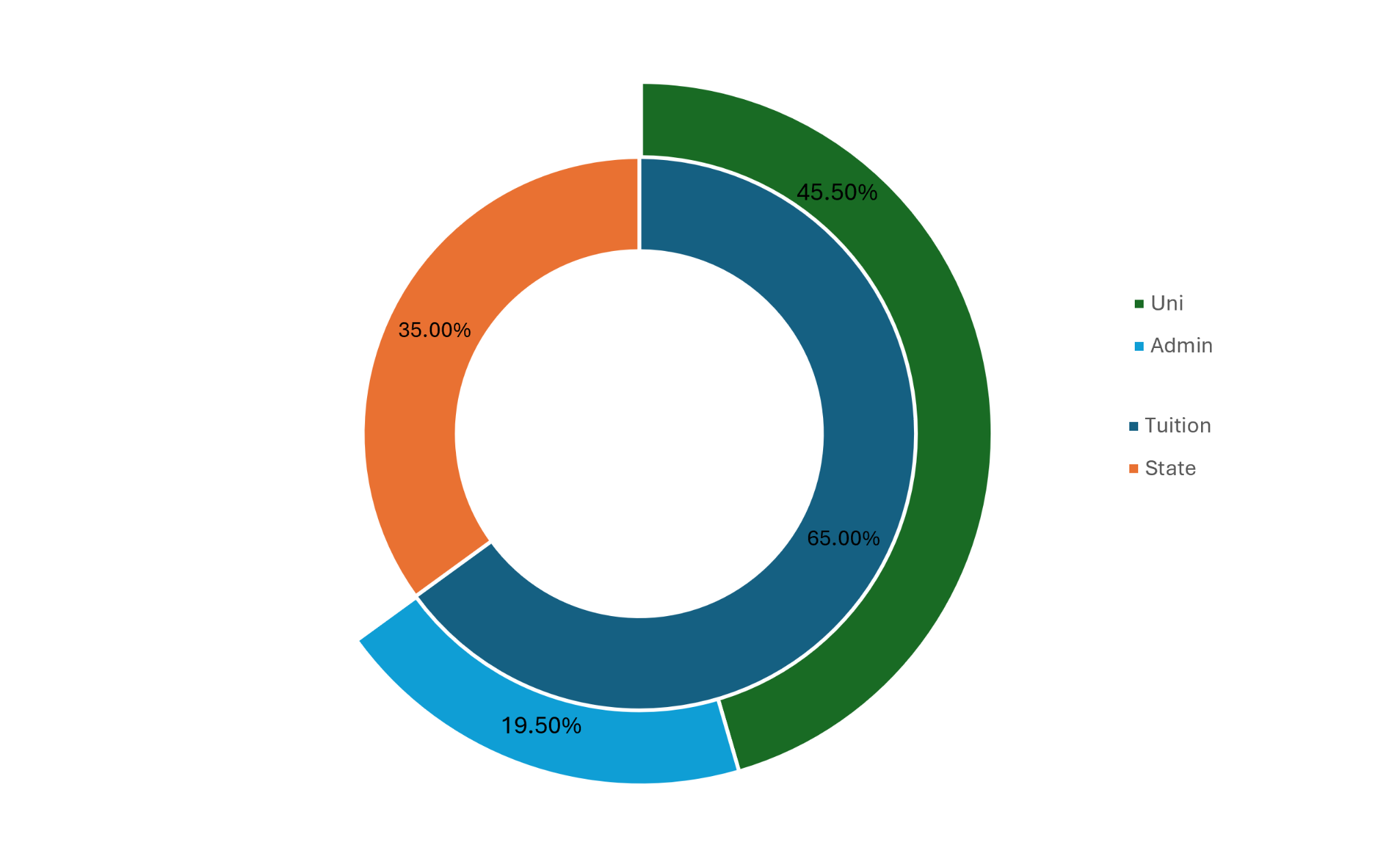
Graph by: Leena Peerzada & Sarah Mellor
Bothell Dining has contracted with Aramark to source and provide all food services on the UWB campus. Furthermore, any department or student organization using catering for an event at UWB totaling over $250 must use Bothell Dining as a part of their exclusive catering deal with few exceptions. This means that most dining provisions at UWB are sourced through Aramark and comply with its policies and practices. The food that reaches our plate at UWB trickles from one company to the next, like through a funnel. Aramark is sourced through their primary supplier Sysco and makes claims of sourcing from local farmers. However, our research did not find any evidence of this. Sysco’s food is supplied from Cargill, a privately held company worth over $60 billion, with three farms in Washington state. Cargill sources its food from 70 countries, mainly from Brazil, China, India, and the United States. This means our food comes from across the globe, underscoring humanitarian concerns and potential implications for the environment.
Aramark themselves have published a significant amount of information about their sustainability goals, practices, and past accomplishments. Aramark and Sysco were recognized by the United States Department of Agriculture (USDA) in their “2022 Champions Milestones” report as leaders in reducing food loss and waste. They claim that their waste tracking technology and food donations to hunger relief and community agencies have played a significant role in reducing waste. They mention further reduction initiatives to divert and prevent waste such as trayless dining, waste audits and employee sustainability training. In a 2022 USDA report, Sysco commits to diverting 90 percent of “operations and food waste from landfills” by sending excess food to local charities as well as contributing food waste via organic waste outlets like animal feed and composting.
While Aramark appears to be a leader in sustainability goals and practices, investigative reports on the issue have shown a dark underbelly to their sourcing and labor practices. According to Repórter Brasil, Cargill was convicted in a first-level Labour Court of using slave and child labor on their suppliers’ cacao plantations. Greenpeace also reported that Cargill was contributing to deforestation, forest fires, and has contributed to major disturbance in Indigenous peoples’ health and displacement within Brazil. Despite claiming to be decreasing this destruction and publishing a formal apology with a 10-year plan to cease, actionable change has not been observed. The effects are drastic. When looking at the environmental consequences of Cargill’s actions such as these, the irreversible loss of biodiversity and soil fertility contributes to 20 percent of annual global greenhouse gas emissions according to the Environmental Defense Fund.
Often the first people who will experience the effects of climate change are Indigenous people due to their reliance on the natural environment for resources which leaves them highly sensitive to changes within it. By losing their land to deforestation, many Indigenous communities experience economic deprivation, violence, lack of health sanitation, and a loss of resources.
By Cargill refusing to end their deforestation, they are knowingly harming Indigenous communities, and fully aware of it. Cargill is not alone in these endeavours. As one of Cargill’s buyers, Aramark has the ability to put pressure on them to change their practices.
This ability to put pressure on a supplier comes from the competitive nature of capitalism. Associate Professor Benjamin Gardner said that it is worth noting that companies like Aramark and Cargill are capitalist endeavors engaged in a profit-driven enterprise. “The thing about capitalism is that people are competing. There is a competition, and they survive by meeting a demand, right? So there is some power in the demand side.”
Gardner said that companies like Aramark and Cargill are incentivized to engage in greenwashing saying, “They sort of gain a social benefit or an environmental benefit by participating at some level in a more sustainable market… by participating marginally in that market, they get the benefit of consumers sort of believing that they’re doing that work without having to sort of spend significantly or significantly changing their model.”
If clients aren’t demanding sustainability, Cargill will not pursue it. However, Gardner said that if faced with pressure, these companies could be forced to face the music. “And you know, that kind of pressure is hard to produce from individual consumers. It really has to start to come from collective groups, like student bodies, like campuses, like different institutions.”
Students Reflect on their Dining Experiences at Other Campuses
Bothell is not the only UW campus with questionable dining practices. Hailey Palacio is a former UWB student who transferred to UW Seattle at the beginning of this year. Palacio said that she feels that her suggestions are more readily listened to at Bothell rather than Seattle. “I think at Bothell, because they asked… for so much feedback from students and so I think if you wanted to enact change, there definitely could be a way that you could do that. It may not be as easy as talking to someone directly. Maybe you could find someone at Bothell, but at Seattle, I don’t think it would be as simple.” She was not aware of an Office of Sustainability or sourcing of ingredients at either schools.

Hailey Palacio, a former UWB student and current UWS student compares her experience across UW campuses.
Photo and interview by: Sarah Mellor
However, UWB still does have things to learn from UW Seattle. The Seattle campus has several Registered Student Organizations (RSOs) organized around sustainable food systems, with student initiative directly leading to Housing and Food Services (HFS) implementing sustainability efforts in some cases. The OZZI reusable container program, intended to reduce the amount of disposable containers used, started as a pilot program organized by a student organization. HFS Dining is also working to increase the amount of plant-based and locally-produced food used on campus. They also donate unused food to the Campus Pantry and local food banks, according to UW Seattle Sustainability Communications Manager Daimon Eklund.
Western Washington University (WWU) is another direction UWB students can look to for inspiration. WWU students have been able to create change in their dining services through using their voices. According to WWU News, University Residences consulted student focus groups as a part of a request for proposal process. Student comments from these focus groups led the campus to pivot away from Aramark and contract Chartwells, another food services provider. a different. After switching to Chartwells, they saw significant quality issues with their food.
In 2024, a student athlete named Myles Witcher expressed his dissatisfaction with WWU’s dining options in a TikTok under the profile @boiledtoenailgrease that showed a hot dog torn in half on a hamburger bun. In an interview with The Husky Herald, Witcher said, “If I’m being honest, I posted it completely for fun. It was just ’cause what I saw, like, what was being served at the dining hall, to me, was just absolutely ridiculous… So I posted that, thinking nothing, and then my phone blew up, and I was like, okay. I definitely didn’t expect it to make as big of an impact as it did, though.” As this TikTok gained traction, complaints from students began pouring in. The school took notice and sent out a schoolwide email expressing their desire to provide a better dining experience for students.
Myles Witcher Initial TikTok.mp4
Myles Witcher, former WWU student athlete, reveals lackluster food quality inside the WWU dining hall in a viral TikTok post. (@boiledtoenailgrease / TikTok)
Myles Witcher TikTok Update.mp4
Myles Witcher discusses improvements in WWU dining in a follow-up post to his initial revelatory TikTok post. (@boiledtoenailgrease / TikTok)
The Power of Student Voices & Activism
Student voices can serve as a catalyst and guide for change at a university level. “My advice is just be loud. Speak out. Speak your dissatisfaction,” Witcher said. He recounted the dining staff thanking him for speaking up. “You’re not only changing dining halls, food quality management, etc. You can change people’s lives and the way they’re working, their funds, their work life, balance. There’s so much you can do with just your voice. So speak up and do not be afraid to.”
The Alliance 4 Sustainability Club President, Faith Lambert, has served on the UWB Campus Advisory Committee for Environmental Sustainability (CACES), since 2023. In an interview on student involvement at UWB, she said that the Bothell administration does listen to students, and that collaborating with faculty and staff can increase the chances of being heard. “If you’re wanting change in how the dining hall practices sustainability, they will listen to it, and it can help to have faculty on your side just because, or even staff on your side because then, it’s just more voices.”

Faith Lambert, Alliance 4 Sustainability Club President and CACES member, discusses avenues for student involvement with Bothell Dining.
Interview by: Leena Peerzada
Students also are represented by the Associated Students of the University of Washington Bothell (ASUWB) as an avenue to advocate for change through pressure on student legislators. Emily Park, the Director of Senate for ASUWB, explained the process for legislation through the Senate and the capacity for student-led change. “If students did pass legislation on behalf of ASUWB it would be required for us to follow up with the steps that the students want to see. And I always say like, student voices are really the heart of UWB, nothing can change the campus as much as student voices. So I definitely think it’s possible.”
We reached out to the Chief Communications Officer Debbie Albert and general manager Christina Chavez at Aramark, and both have declined to answer questions sent after our initial communication.







Leave a Reply