September 2025 | Written by Zoya Merkaov
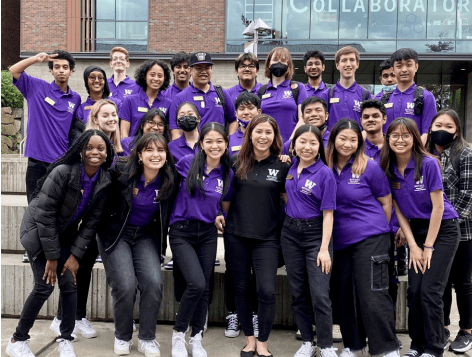
Image Credit: UWB OTP/Peer Coach website
Being a first-year student can feel overwhelming. Regardless of age, whether someone is living with their family or has picked a major, coming to college can be a big adjustment. The Peer Coach program at the University of Washington Bothell aims to tackle the age-old struggles that students have when attending college for the first time.
The Peer Coach program at UWB assists students by giving them a peer coach based on their meta-major. Meta-majors are a broader grouping of majors that students can choose from based on interest, to explore the degree options within. The meta-majors at UWB include business and policy, arts and media, education and society, health and natural sciences, and technology and engineering.
In an interview with Emily Leonard, the Assistant Director of Peer Coaching, Leonard stated that the peer coach program is, “unique to UWB. While the Seattle and Tacoma campuses have positions where peers are also coaching students … We are the only campus where every incoming first-year student self-selects a coach whose relationship starts at orientation and continues through the academic year.”

After asking Leonard about the main goal of the peer coach program, she explained how the peer coach program’s goal is to “support all first-year students in successfully transitioning into the University of Washington Bothell. We know the adjustment to higher education is more than just academics.” The peer coaches achieve this by getting to know their assigned students during first-year orientation, and then they create personalized one-on-one meetings once a month to help students navigate all aspects of their first year. Looking at the Peer Coach perspective, Jennifer Ramirez, also known as “Peer Coach Jenny”, is a 2025–26 peer coach for Business and Policy students. She explained that “as peer coaches, our objective is to support incoming students by helping them set personalized, achievable goals that guide them through their first quarter at UWB.” As a student, Jenny understands the many challenges of adapting to a new campus, and through her peer coach role, she ensures they feel supported with empathy.
“We want students to feel like they belong here at UWB, that they’re seen, valued, and believed in. We want to ensure they’re building self-efficacy inside and out of the classroom, that they’re finding community, networking, and planning for a career that’s meaningful for them,” Leonard adds. Peer coaches have been helping students become more successful and connected to the campus through their involvement. Leonard revealed how “there have been students who reported they may not have continued at college if it wasn’t for their coach connecting them with the right resources. Others have shared that their coach helped them navigate imposter syndrome and feel confident in meeting with their professors, applying for study abroad, and getting involved in clubs that represent their identities or interests.”
The program isn’t only beneficial for students, but it is also beneficial for the peer coaches themselves. Jenny described how peer coaches “gain experience in goal setting, public speaking, problem-solving, and collaborative teamwork, among many other skills, which are valuable to anyone regardless of their career path. Additionally, the program has allowed [her] to connect with students from diverse backgrounds, exchange ideas, and build positive relationships.” As a peer coach, Jenny’s favorite part of the job is “meeting students, putting faces to names, and learning about their passions and goals has been very fulfilling. Whether connecting in person or over Zoom, [Jenny] loves answering their questions and guiding them toward the resources they need.”
According to Leonard, the two biggest achievements of the peer coach program during the 2024–25 school year were that 95% of first-year students met with their peer coach during the fall quarter and 100% of students reported being supported through a challenge they were facing in a survey. When asked about the upcoming goal for this current school year, Leonard reported that a big goal for them is to continue being a valuable resource for students. “Our program is designed to support students, so hearing that the overwhelming majority believed we were achieving that is something we plan to continue …”, Leonard stated. For more statistical data regarding the impact of the peer coach program, reference the Infographic for Advancement.
Overall, being a first-year student can be tricky, and the peer coach program is here to help with all the trials and tribulations involved. One piece of advice from Peer Coach Jenny to first-year students is, “to not compare yourself to others! As we transfer into college life, it can be overwhelming at times, and it becomes easier to compare ourselves to others or begin to question our abilities … Instead of measuring yourself against others, focus on your own growth. Celebrate your wins, no matter how small, and treat setbacks as learning opportunities. Rather than striving for perfection, focus on making intentional improvements for yourself.”
Interested in becoming a Peer Coach? Stay connected through the Orientation and Transition Programs Instagram page @otp_uwb, where they announce their applications in the Autumn Quarter!
 The Husky Herald