Image Credit: Unsplash
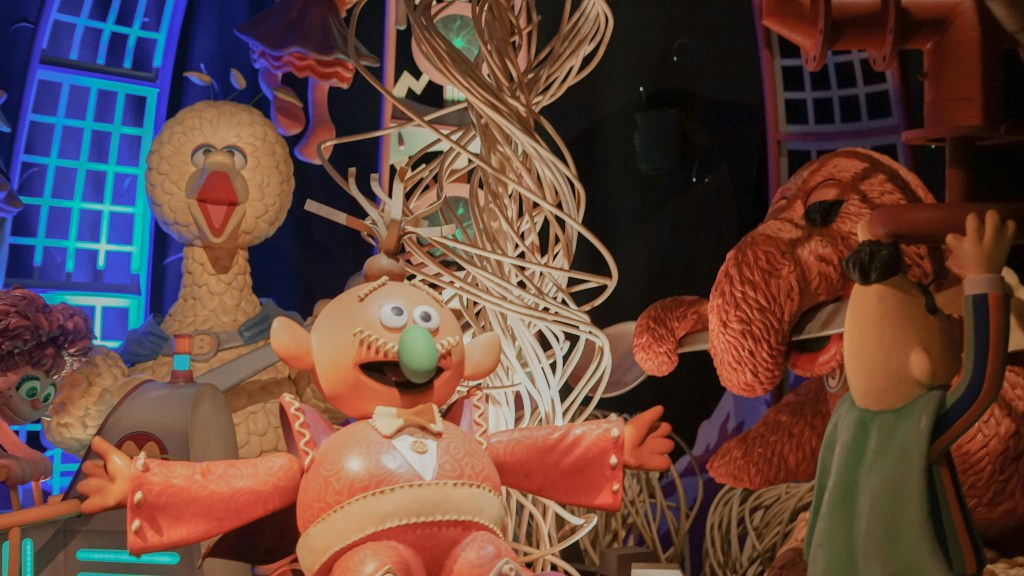
From the iconic fluffy red puppet Elmo to sassy Oscar the Grouch and the fuzzy blue Cookie Monster, it is no wonder that so many people wish to take a stroll on Sesame Street. Reminiscing about their favorite episodes and discussing how the show influenced their lives. Luckily, November 10 is a great time to pay homage to this favorite childhood show, as it was proclaimed Sesame Street Day in 2009. Sesame Street has been entertaining and educating generations of children with its distinctive puppets, humorous delivery, and thought-provoking themes. Whether it will keep on doing so is up in the air.
The creators of Sesame Street is Public Broadcasting Service (PBS). With approximately 3,000 employees, the PBS mission is to share “unique perspectives and insights so [they] can promote learning and advance understanding [so] PBS can continue to grow as a place where everyone feels welcomed, celebrated, and connected.” PBS has been keeping this mission statement at the forefront of all its programming, which is why Sesame Street episodes display complex issues such as grief and loss, racism, and ways to stay kind and true to oneself.
PBS also broadcasts traditional educational programming with shows dedicated to teaching topics in english, math and science in an engaging way. Having this type of programming in society is vital, as it is a free resource that provides children with a holistic education and highlights the importance of growth . According to Arizona State University, PBS “collaborates with child development experts and educators to ensure its content supports cognitive and emotional growth. Studies have shown that children who engage with PBS KIDS programming demonstrate improved literacy and math skills.” In a world where children are watching the next video that autoplay’s on a streaming service such as YouTube, it is especially important to have content that is guaranteed to have a positive effect on children’s learning . There is a rule within the station that PBS Kids content must include “social, emotional, cognitive, physical, and language development” as well as focusing on topics pertaining to literacy, S.T.E.M, art, and social studies.
However, this may not be the case anymore. On May 1, the current Trump administration signed an executive order titled “Ending taxpayer subsidization of biased media.” Through this executive order, the National Public Radio (NPR) and PBS will no longer receive American taxpayer funds. The executive order explains the rationale for this legislation, stating that “Americans have the right to expect that if their tax dollars fund public broadcasting at all, they fund only fair, accurate, unbiased, and nonpartisan news coverage.” The executive order also goes on to describe how there is no constitutional right for media outlets to have access to taxpayer subsidies, and how the government is in the position to decide who receives subsidies.
This puts the PBS mission in jeopardy. According to NPR, “PBS’s chief executive told public television officials … that it was cutting about 15% of its jobs due to the move by Republicans in Congress to eliminate all federal funding for public broadcasting starting on Oct. 1.” This results in a plethora of jobs being lost inside PBS, which will also result in a loss of revenue for the company. PBS Chief Executive Paula Kerger highlighted this point as she told NPR their “system is taking a 21% hit in revenues”. This cut also means less money for PBS’s beloved programs, such as Sesame Street, Super Why, and Clifford the Big Red Dog. More programs may be cut from PBS, or PBS may need to reduce the number of episodes produced for its shows. Without funding for their shows, there will be less intentional and free educational programming shows for children, especially those that focus on holistic education portrayed in a fun way.
This is especially detrimental to lower income families who cannot afford internet or subscriptions as PBS has been free educational resource. The price for a standard Netflix subscription is $17.99, Hulu’s add supported plan is $9.99 per month, and Amazon Prime costs $14.99 per month. Within a blink of an eye, low-income homes may be priced out of seeing high quality educational content. This is especially evident as “PBS is viewed in 87% of non-Internet homes and 56% of low-income homes” and “60% of [its] audience lives in rural communities,” as stated by PBS. It is vital that people of all socio-economic backgrounds have access to educational programming, as the further educational divide may lead to more income disparities as children become adults and enter the workforce.
Moreover, since shows like Sesame Street helps teach various aspects of the English language, funding cuts may contribute to the current literacy crisis in the United States. According to the National Literacy Institute, “54% of U.S. adults read below the equivalent of a sixth-grade level, and 64% of our country’s fourth graders do not read proficiently.” The decreasing national literacy rate and gaps in children’s education can be partly due to the effects of schooling during quarantine. The effects may be exacerbated by the increasing number of educational programs being cut, which reduces the overall exposure to content focused on developing children’s literacy skills post-pandemic.
Not only is PBS programming widely enjoyed and essential for children, Americans all over the United States continuously choose PBS as “36 million people watch their local PBS stations, more than 16 million viewers watch video on PBS’s site and apps, and over 53 million fans enjoy PBS Digital Studios and other content on YouTube.” This is because PBS strives to cater to various demographics by having numerous channels and programming that appeal to diverse communities. For instance, “over the course of a year, PBS stations reach nearly 20 million Hispanic viewers, 19 million Black viewers, and over 7 million Asian viewers”. Furthermore, Americans across the political spectrum watch PBS. Nearly “two-thirds of [their] audience identifies as Republican or Independent (63%).”Overall, this shows how people of all diverse backgrounds are enjoying and benefiting from their programs, not just children.
Ultimately, defunding PBS may hold many ramifications for the American people, especially children, which makes this year’s Sesame Street Day have a somber tone. Reducing the amount of free educational content will negatively impact children and their overall education, may price out families that cannot afford to view educational content on other platforms, and sadden the millions of diverse communities across America that rely on PBS’s entertaining programming. One way to celebrate Sesame Street Day this year is to engage in ways to support public nonprofit stations during these challenging times. Donating directly to the stations is one of the best ways to support them. Another way is to contact state representatives tovoice concerns about the defunding of public stations and raising awareness through posting on social media. If public stations can be supported despite the executive order, current and new generations of children will get to experienc the magic of PBS shows and celebrate Sesame Street Day.
 The Husky Herald