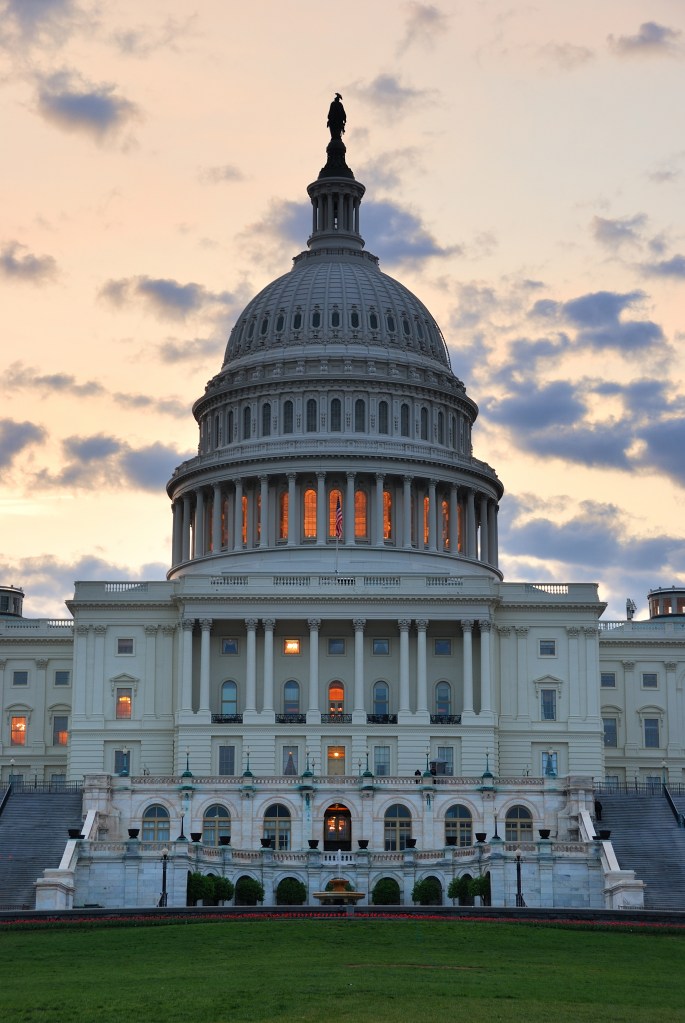
On Oct. 1, 2025, the U.S. government shut down after failing to reach a resolution on the spending bill (or appropriations bill), which is required annually for the government to operate. If an appropriations bill is not passed by Oct. 1 of each year, Congress would have to enact a continuing resolution, which would allow for temporary operation, according to the U.S. Senate. While an appropriations bill had seen success in the House, it failed to win in the Senate, along with a continuing resolution. Senate republicans voted to pass the bill but faced democratic resistance to extend the enhanced Affordable Care Act and rescind the cuts to Medicaid spending in the One Big Beautiful Bill Act, according to Fact Check. While an initial effort to pass a continuing resolution failed, a new continuing resolution garnered democratic support, opening the government as of Nov. 12, 2025. However, it should be noted that the new continuing resolution will only be effective until Jan. 30, 2026, according to Politico.
While the end of the shutdown brings some optimism back, it’s not easy to forget how many citizens’ lives were disrupted through the lack of funds for essential services and increased displacement within the workforce. Specifically, in Washington State, the White House added information on the economic impact of the shutdown, which involved a reduction in growth and employment, delayed and stopped federal benefits, and frozen loan distributions for small businesses. Washingtonians additionally see three key state agencies that have been affected by the shutdown, including the Department of Social and Health Services, Department of Health, and Employment Security Department, according to Washington State Office of Financial Management (OFM).
The Department of Social and Health Services delivers a wide variety of services including the supplemental nutrition assistance program (SNAP), electronic benefits transfer (EBT), temporary assistance for needy families (TANF), housing assistance, child support, vocational rehabilitation, adult care, mental health services and disability support. For more information about their work, contacts, or to locate a service office, see their website at dshs.wa.gov. OFM says nearly one million Washingtonians rely on the federal SNAP program with an estimated $37 million per week distributed across Washington households. When the shutdown took place, SNAP funds were scheduled to end on Nov. 1, a month after the shutdown began. However, thanks to a federal court order, the Trump administration had to fully fund November SNAP benefits, which included one million Washingtonians, according to a statement from Washington Governor Bob Ferguson. However, initially, Governor Ferguson directed $2.2 million to support Washington’s food banks ahead of the federal court order. The initial $2.2 million had been aimed to combat food insecurity in the event SNAP funds weren’t restored, demonstrating the need for federal funds to prop up programs like SNAP.
The Department of Health additionally faced operational difficulties from the shutdown. The department tackles disparity in Washington by catering to vulnerable and underserved communities in Washington. Their work is incredibly comprehensive and tackles asthma to zoonotic disease; a full list of individual programs and contact information can be found on their website. The Department of Health identified Washington’s Women, Infants, and Children (WIC) program at risk of closure amidst the shutdown. The WIC program provides food for more than 212,000 Washingtonians annually, but unfortunately, it faced a funding shortage and would have had to cease operations, according to the Department of Health. The WIC service is an essential service, which in Washington, serves one-third of babies born here, 36% under the age of five, and 29% of pregnant people. The WIC additionally delivers nutrition education, breast and chest feeding support, and health screenings through its expansive network. While the reopening of the government brought regular funding for operations and lifted some strain in delivering essential services, the shutdown almost risked a complete closure of the WIC program. Perhaps, a longer shutdown into December could’ve collapsed the WIC program entirely, leaving more than 212,000 Washingtonians helpless.
Last, but not least, the Employment Security Department had their operations disrupted by the federal shutdown as well. Their primary work revolves around employment support, offering assistance with unemployment insurance and paid family and medical leave. However, they’re responsible for much more, all of which can be found here at esd.wa.gov . One consequence of the shutdown was the increase in federal workers applying for unemployment benefits. In fact, the ESD mentioned that 5,884 people filed for unemployment for the week ending Oct. 3, 2025, which was 1,094 more than the week prior. That number spiked to 6,287 for the week ending Oct. 10, illustrating the consequences of the shutdown on the workforce. The laid-off and furloughed workers now face financial stress, a lack of income, delayed unemployment processing, and decreased support from the state government. Ultimately, the uncertainty felt and the fear of other federal workers losing their jobs became the cherry on top of the longest ever government shutdown.
For students at the University of Washington at Bothell, the Husky Pantry is accessible for those who may be facing food insecurity. The pantry can be especially helpful in challenging times like the recent shutdown, where SNAP and EBT benefits have been delayed for many. The Husky Pantry is located in the Health and Wellness Resource Center (HaWRC) at ARC 120 and is currently open on Mondays and Tuesdays from 12pm to 5pm. If those times do not work, students can request access at another time by contacting the HaWRC (hawrc@uw.edu). Students should additionally verify with the HaWRC for the most current schedule, which may change from quarter to quarter.
While people from all over the U.S. see an end to the extensive shutdown, it is important to remember how significant a government shutdown can be and how reliant a lot of people are on the federal government to operate like normal. For Washington, the shutdown had a sizeable economic impact and disrupted key state agencies leaving residents experiencing delays, disruptions, and uncertainty in essential services. Even as these agencies recover, residents should be aware that state government itself cannot sustain residents for long and that cooperation with the federal government is really the cornerstone of being able to deliver essential services to US residents and Washingtonians alike.
 The Husky Herald