
U.S. Immigration and Customs Enforcement, also known as ICE, is a federal law enforcement agency operating under the U.S. Department of Homeland Security (DHS). ICE was founded in March 2003 following the Sept. 11, 2001, terrorist attacks through the Homeland Security Act passed in November 2002. The Act helped create the Department of Homeland Security and additionally consolidated 22 different federal departments and agencies under the same authority for tighter integration.
While Homeland Security shares broader authority in keeping the United States safe, ICE’s specific mission includes securing the nation’s borders and safeguarding the integrity of the immigration system, according to the U.S. Immigration and Customs Enforcement website. ICE’s mission additionally shares responsibility in detecting and dismantling transnational crime networks that may threaten national security. ICE’s operational directorates, Enforcement and Removal Operations and Homeland Security Investigations, respectively, are critical to advance these missions. Additional operational directorates of ICE include the Office of the Principal Legal Advisor and Management and Administration, which you can learn more about in the History section of their website.
ICE announced, in Jan. 2026, a historic 120% manpower increase. The number of officers and agents doubled from 10,000 to 22,000, after receiving more than 220,000 applications according to DHS. ICE further stated that thousands of these new officers and agents have already been deployed nationwide and are actively contributing toward immigration enforcement. However, there is growing concern over ICE’s record-setting recruitment numbers, especially as reports of lowered hiring and training standards float. In a press release, Senators Alex Padilla and Cory Booker pointed out by significantly lowering standards for newly hired agents, the Trump Administration “compromised the integrity, professionalism, or operational readiness of the federal immigration law enforcement workforce.” The Senators continued to point out that the Department of Homeland Security’s failure to maintain basic professional standards has led to “public reports of misconduct among current officers” and that “American citizens and noncitizens alike are already experiencing the consequences.” Furthermore, the Senators identified a report where more than 200 of these new ICE agents were dismissed due to improper vetting. Those dismissed failed drug testing, had criminal backgrounds, or did not meet physical or academic standards. The report additionally mentioned ICE’s training, which was got shortened “from 13 weeks to eight” and “later shortened to six weeks.”
ICE’s expanding workforce continues to attract national concern. The recent murder of U.S. citizens Renee Good and Alex Pretti during an ICE operation in Minneapolis, Minnesota invited public outrage. Representative Robert Garcia said in a report, “the killings of Renee Good and Alex Pretti could have been prevented “and that the “Trump Administration’s aggressive, violent, and unlawful immigration enforcement tactics have facilitated them.” Representative Garcia further commented, “these slain Americans posed no threat to federal officers or intended to kill them,” which contrasted Trump Administration officials’ statement which painted them as domestic terrorists. Public outrage at federal immigration agents across the nation intensifies as operations continue.
With ICE operations being expanded throughout the country, Washingtonians are reporting local presence of agents in Bellevue, Tacoma and Seattle. Earlier in the month, a video circulating on social media revealed federal immigration officers making an arrest in Bellevue, Washington. The Bellevue Police Department confirmed the incident in an email sent to KIRO Newsradio, and said the Department of Homeland Security confirmed the operation. In Tacoma, Nurses at the St. Joseph Medical Center have reported that they have seen a surge in detainees come in as patients along with ICE agents guarding them, as reported by KUOW. These nurses have asked to see ICE out of their hospital and explained how agents have been harmful to the healing environment, community, and preventative care. These nurses have additionally reported that ICE brings detainees too late, despite federal law requiring agents to provide timely medical care. As of Oct. 15, 2025, there have been about 2,000 arrests in Washington, according to Deportation Data Project, though that number is likely higher today. Not only do these arrests include children as young as three years old, they additionally include individuals with no criminal convictions or pending charges.
Washingtonians have had enough of these inhumane operations conducted by federal agents on a power trip. Seattle has hosted multiple protests in recent weeks and continues to host them, especially as plans of ICE leasing an office in Riverfront Technical Park, Tukwila unfolds. Students from Seattle public and private schools have additionally been noted to be a part of these protests. KOMO recorded hundreds of students rallying at City Hall and near fourth Avenue on Feb. 5, 2026. These students have shared with KOMO that they want ICE to leave Washington. Meanwhile, other students, like Lakeside Upper School senior Amara Aalfs-Weinbaum, have told KOMO they want city leaders to “invest in concrete support systems and protection measures” and to “continue to defund ICE.”
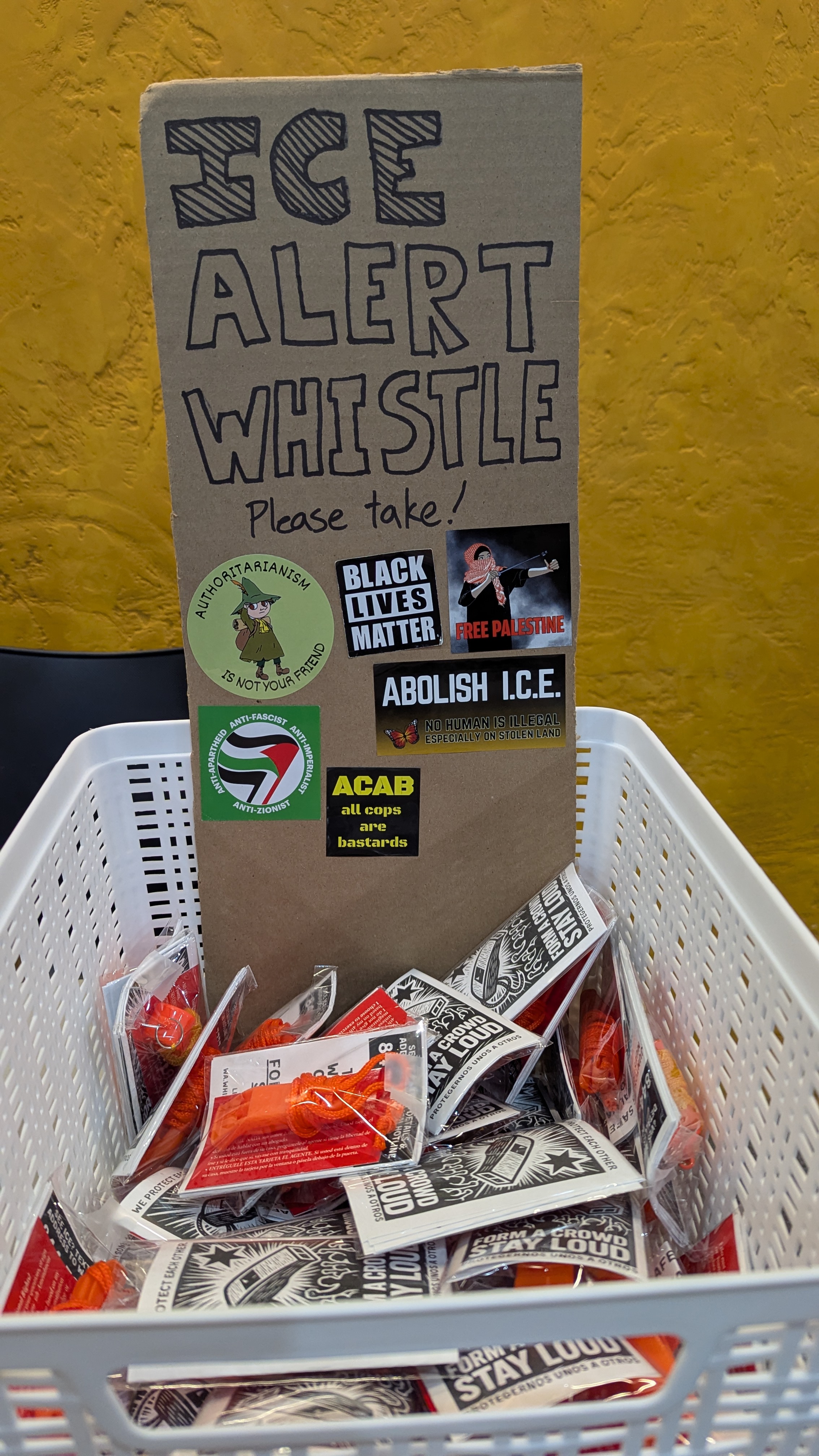
Students at the University of Washington Bothell organized a similar “Rally Against ICE” protest on Feb. 11 at the Plaza. Student demands included schoolwide alerts and lockdowns when there is ICE activity on campus, transitioning to hybrid and online models during periods of prolonged ICE activity, guaranteed protection for all students and training for students, staff, and faculty on appropriate protocols. These students have planned another organized protest on Mar. 11 at the Plaza. Recently, a student club has spread activism efforts including distributing ICE whistles and educating people on the topic of immigration enforcement to protect and spread awareness. Seattle and Washington residents interested in attending peaceful and non-violent protests can find more information by visiting the Seattle Area Protest List and on the Seattle Indivisible website. However, note that the Seattle Area Protest List only lists events until early March.
For those that do not want to attend organized protests but would like to support immigrants in other ways, Safe Haven and Indivisible Eastside take reports of ICE activity from bystanders, document detentions and forward information to legal professionals. The Jewish Coalition for Immigrant Justice NW additionally provides substantial information to support those detained in Washington. They provide hotline and private attorney phone numbers as well as names of organizations providing legal help or referrals. Similarly, the University of Washington posted protocol information to help students respond to requests from federal immigration authorities which includes campus and facility safety contacts to call, should a student be in an active encounter with an agent.









Leave a Reply