
When you look at the campus wetlands, it’s hard to imagine that it used to be empty farmland just 25 years ago. In the past two decades, the wetlands have been transformed through targeted ecological restoration efforts like plantings, river reconstruction and maintenance. Today this area supports the university’s educational goals, stormwater management, and a healthy biodiverse ecosystem.
I met Tyson Kemper and Gabe Barnes, the ground supervisor and wetlands and gardener, on a sunny morning on the boardwalk on May 27. We talked about the complex ecosystem while birds chirped up above and North Creek rippled below. Having worked full-time for over 20 years, they explained their long-term employment was a unique situation for restoration projects, a reflection of the campus’ ongoing commitment and why the restoration was so successful. While the wetlands are now in a stable self-sustaining mature stage of ecosystem establishment, they still require maintenance like invasive plant removal, plantings of coniferous saplings and watering planted saplings in the summer. As a pesticide free campus, removal of invasive species like Himalayan Blackberry, Canary Grass and Japanese Knotweed must be done by hand in an ongoing process.
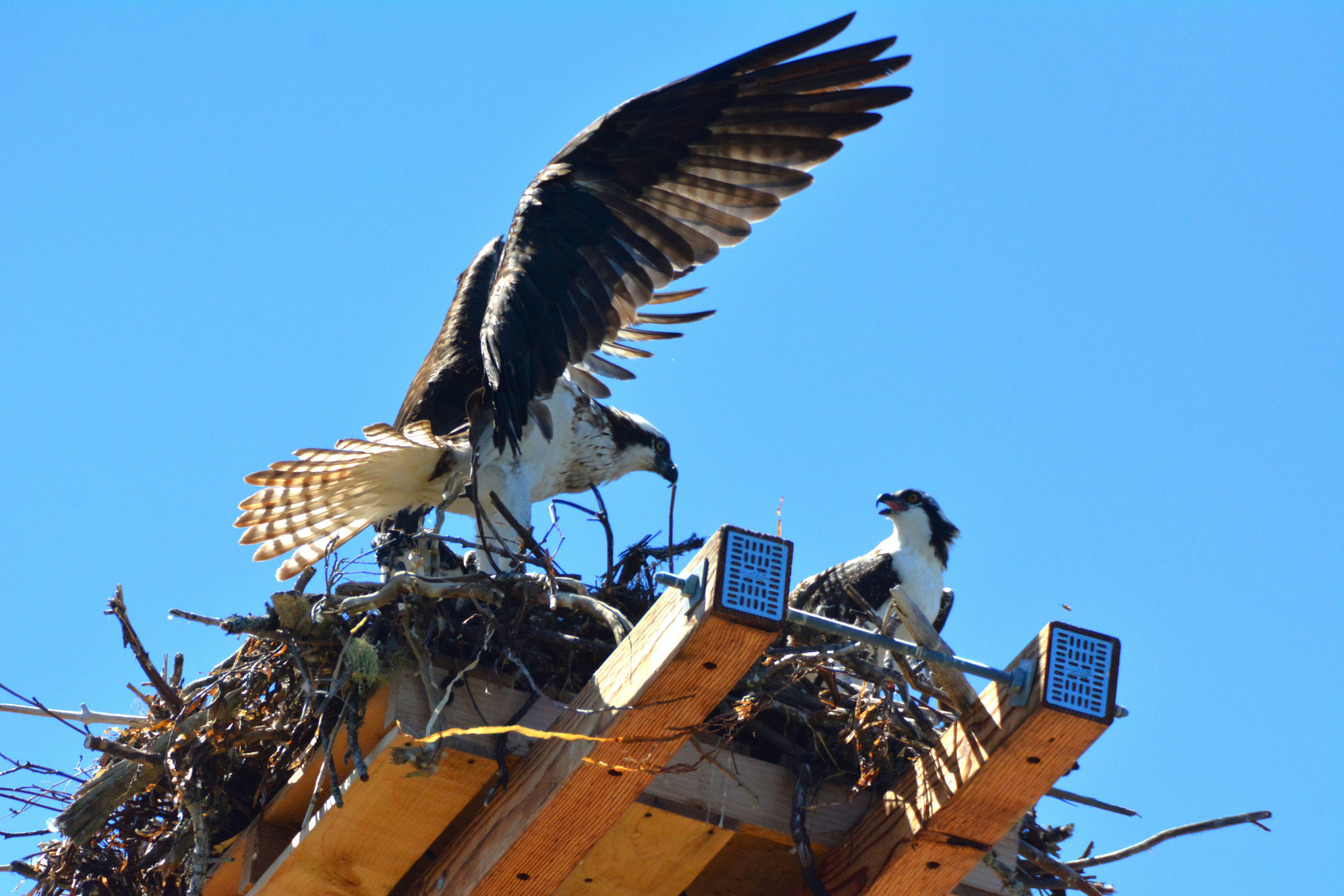
Tucked between i-405 and the UWB campus, the North Creek wetland is in a uniquely urban environment. Despite that, both Tyson and Gabe highlight a surprising amount of wildlife sightings on the land, with Gabe stating it is the best part of his job. The Osprey nest is the most visible and easiest to see, perched on one of the light poles on the sports field behind the ARC. Osprey nest close to water sources and our campus residents feed from Lake Truly. They have been nesting on our campus for the past two years. Located near the Conservatory is also a family of the brightly colored Wood Ducks. Dr. Valdez, a bird researcher and professor at UWB has detected over 50 bird species in the wetlands.
An exciting keystone species you might spot if you’re lucky are the beavers. Their dam is in the upper portion of the stream and hosts about five to seven beavers, according to Tyson. They are elusive and nocturnal; the best time to sight them is at the boardwalk in the evening. Previously, the wetlands staff were instructed to remove their dams to reduce flooding at Sarah Sigmond’s Conservatory which is built on the floodplain. However, around five years ago, the university made the decision to let beaver activity influence the wetlands. Since then, there has been a reduction in flash flooding in the North Creek River which would lift up the boardwalk. Because of this, there are now shorter summer dry seasons and stable water levels. This change improves the plant performance and biodiversity. Gabe says, ‘the animal activity has definitely increased which I really like to see.”
Healthy ecosystems rely on not just the large species, but also the small, overlooked critters beneath our feet. Dr. Price, an entomologist professor at UWB who mentored research at the wetlands, mentions that large numbers of the Primitive Carrion Beatle were found feeding on campus, an otherwise rarely sighted species. North Creek also provides habitat for many threatened keystone salmon species like Coho, Sockeye, Chinook and the endangered freshwater Kokanee salmon. They can be seen spawning in the fall. Other interesting wildlife sightings mentioned by Tyson and Gabe included river otters and bob cats.
Students can engage with the wetlands as a researcher, volunteer or intern. Connecting with professors who work in the wetlands and taking hands-on classes are great ways to get involved with projects, and a list of wetland researcher can be found on the website. Volunteers can email UWB Sustainability to get connected, or join Native Plants Society club meetings to work in the wetlands. If you are interested in a paid internship, campus grounds hire one to two fulltime interns every summer.
The wetlands provide a snapshot of the evolving human-nature relationship. What started as a diverse home for many species with indigenous tribes as caretakers of the land, to heavy logging, farming and human disturbances, to healing with active ecological restoration, represents the resiliency of nature. Tysons states that reflecting on that change in such a short time period “gives me hope for the world’s environmental challenges.” As UW Bothell continues to grow as a school, the wetlands remain an educational resource for students. Gabe mentions that his job has increasingly led to playing the role of an outreach and access coordinator for students, tours, classes and volunteers. Now, the challenge is maintaining a balance of access without disturbing the ecosystem, Tyson says.







Leave a Reply