
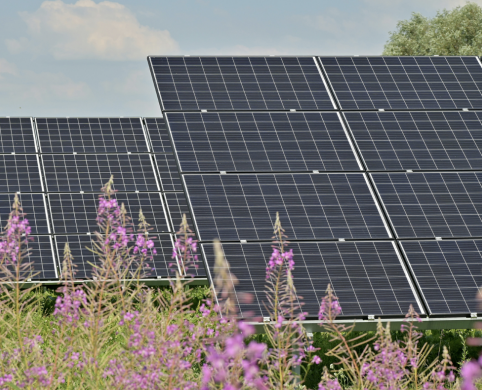
Image Credit: Unsplash
Households in Washington state are bracing for a sharp increase in monthly utility bills in 2026 as providers statewide implement
higher rates. With regional utility rate hikes set to add up to $200 annually, state officials are stepping in to challenge the proposals before the Washington Utilities and Transportation Commission. The notable increase in utility rates entering 2026 is driven by new statewide clean energy mandates and high electricity demand from expanding regional data centers across Washington state.
According to Axios, between May 2024 and May 2025, the average residential prices for electricity went from 12.14 cents per kilowatt-hour (kWh) to 13.67 cents/ kWh. The 12.6% increase substantially outpaces the national residential electricity price growth of 6.5% during the same period, as reported by the U.S. Energy Information Administration. Despite this surge, Washington residents continue to pay less than the national average rate of 17.47 cents/ kWh. This is mostly due to the state’s vast hydroelectric infrastructure. However, the price gap is rapidly closing, and this creates financial pressure on households that must
manage high inflation and elevated cost of living burdens.
Rate adjustments are taking effect across multiple public and private providers, causing an estimated average increase of $150 to $200 per year for typical households as stated by NWSolar. For instance, Puget Sound Energy (PSE), provides electricity to about 1.2 million customers and natural gas to roughly 900,000 customers. The company enacted a 9.3% increase in electric rates. This is roughly $11.20 per month for a customer using 800 kWh. Additionally, there is a 2.07% rise in natural gas rates, which are about $1.51 per month for 64 therms.
Seattle City Light, a different energy provider, has raised monthly residential bills by roughly $4 per month. This results in an $8 monthly increase in which the money would fund climate change and clean energy goals. Furthermore, the customers of Tacoma Power Utilities have seen an increase of about $7.09 each month in 2026. This will result in a total monthly increase of more than $13 by the end of 2026 due to the cost of operational and inflation. Additionally, Snohomish PUD will raise its rates by 2.5%, which will be reflected in a bill increase of around $2 to $3 each.
One of the most intense controversies over rising costs concerns a multi-year rate proposal made by PSE. As reported by KOMO News, the proposal was to increase electric rates by 29% and natural gas rates by 20% over a period of three years. Washington State’s Attorney General, Nick Brown, testified against the proposal, claiming that the increase is too much for residents. The state estimates show that according to the proposal, the monthly electric bill of an average customer will go up by $28.31 in January 2027, reaching $50.58 per month by 2029. As for the natural gas bill, it would be $13.63 per month in 2027 and reach $21.96 per month by 2029.
According to the Office of the Attorney General, Attorney General Nick Brown brought attention to the significant amount of money spent by PSE. He pointed out that 12% of electricity bill payments and 11% of gas bills are used towards paying dividends to shareholders rather than utility services. Attorney General Nick Brown suggested a new regulation system under which PSE’s profit margin would be limited to 8.17% instead of the guaranteed 10.8% under PSE’s proposal. This would take away the risks associated with executive payment and market volatility from customers, potentially saving them $695 million in 2027. The increased prices could also burden many residents considering that over 30% of Puget Sound residents spend more than 30% of their salary on housing.
Puget Sound Energy claims that its proposal for increasing electricity rates is necessary to pay for increased reliability of the grid, wildfire prevention, and advanced system technology. Additionally, the company must comply with Washington’s Climate Commitment Act requiring carbon neutrality by 2030. According to Axios, the unprecedented high electricity demand caused by the expansion of data centers, population growth in the area, and the adoption of electric cars has put more pressure on the current electrical grid system. Utility companies are implementing time-of-use pricing programs that allow people to benefit financially
from Northwest Electric and Solar.
As Washington moves toward carbon neutrality by 2030, the tension between environmental goals and consumer affordability is still a delicate balance. Residents can also take their own initiatives to lower their bills by practicing energy conservation at home. Simple daily adjustments such as adopting time-of-use habits, sealing home draft points, lowering thermostats during winter, and switching to energy-efficient LED lighting can help to reduce household power consumption. Homeowners can also choose to invest in rooftop solar panels or battery storage to lessen their dependence on the grid. Utility customers can also voice their concerns regarding the increasing rates by speaking in upcoming public comment hearings hosted by the Utilities and Transportation Commission on Sept. 29 and Oct. 7.
The drive toward clean energy is seen today at UW Bothell, where campus sustainability efforts align with regional objectives. UWB works to reduce its energy impact in the region by engaging in PSE’s Green Direct program, purchasing all of its electricity from renewable sources such as solar panels and wind energy projects. The campus also implements state building standards, such as LEED Gold certification of Discovery Hall and Innovation Hall. UWB also uses renewable energy systems like the 102-kW solar array mounted on the roof of the library and10 kW solar systems on the parking garages, as stated on our campus website. Regardless of whether the conservation of power takes place in individual households or campus-wide, proactive energy management continues to be one of the best strategies to counter the rising cost of utilities in Washington state.










Leave a Reply