
This January, The Husky Herald is excited to honor International Creativity Month, a time dedicated to recognizing the power of imagination and innovation. The observance was founded by Randall Munson, a business executive and author of the book Creativity 102, which encouraged individuals to explore and strengthen their creative potential.
Creativity is often misunderstood as a talent limited to artists or designers, however, it is a skill that influences every field. According to author James Clear, creativity is the process of using imagination to connect old and new ideas in meaningful ways. A notable example is Steve Jobs’ introduction of the iPhone in 2007, which revolutionized phones by integrating a touchscreen interface. As a result, the iPhone has continuously reshaped technology in communication, work, and daily life with new models that have come out every year.
Other products of creativity can be intangible, such as theories, music and stories. In today’s digital world, creativity is becoming increasingly important. As technology and artificial intelligence continue to advance, society faces more complex challenges that require human-centered solutions. According to a 2025 Microsoft report, global adoption of generative AI tools has reached over 16 percent of the world’s population, with one out of six people in the global north using AI in their everyday life. Although it is argued that AI can be a powerful tool, it also raises questions about authenticity when it comes to art creation and human connection.
This tension highlights that as machines become more capable, human creativity in problem solving becomes even more valuable, as it allows individuals to bring perspective, emotion and intuition to ideas, something no technology can replicate. Through intentional efforts, students can hone in on their creative problem-solving skills by questioning the status quo, observing patterns, and engaging in thoughtful conversations with diverse perspectives.
Problem-solving is essential in many sectors outside of technology, such as leadership and policy change. In a world where many social injustices persist, creative thinking plays a crucial role in imagining alternative systems, amplifying marginalized voices and designing solutions that lead to more equitable futures. To advocate for changes in higher education, the Associated Students of UW across all three campuses will be lobbying on Feb. 10 at Olympia for their annual Huskies on the Hill event. Transportation and food will be provided, and students will have the opportunity to raise awareness of issues such as financial aid funding, healthcare and more.
Furthermore, creativity is closely connected to community mental and physical well-being, according to Mayo Clinic. Healthy habits such as adequate sleep, regular exercise, and taking mindful breaks can significantly enhance cognitive flexibility and function. Research shows that sleep plays a critical role in regulating blood pressure, strengthening memory, and supporting emotional stability. By prioritizing well-being, individuals create the mental and physical space necessary for exploration.
Furthermore, setting aside time for hobbies such as writing, music, design or problem-solving (like solving a puzzle) can strengthen creative thinking and encourage new ways of approaching challenges. On campus, students can further foster creativity by attending events and collaborating on projects.
At UW Bothell, there are numerous clubs and spaces that allow students to find community through shared passions. The Husky Book Club brings members together to discuss a selected book, which is voted upon every month. For students interested in editorial and literary work, UW Bothell’s Literary & Arts Journal, Clamor, provides opportunities to publish original writing and art, gain editing experience, and contribute to creative storytelling. Clubs such as the Law Society, the Association for Computing Machinery and the Bothell Consulting Association also offer professional skill-building workshops.
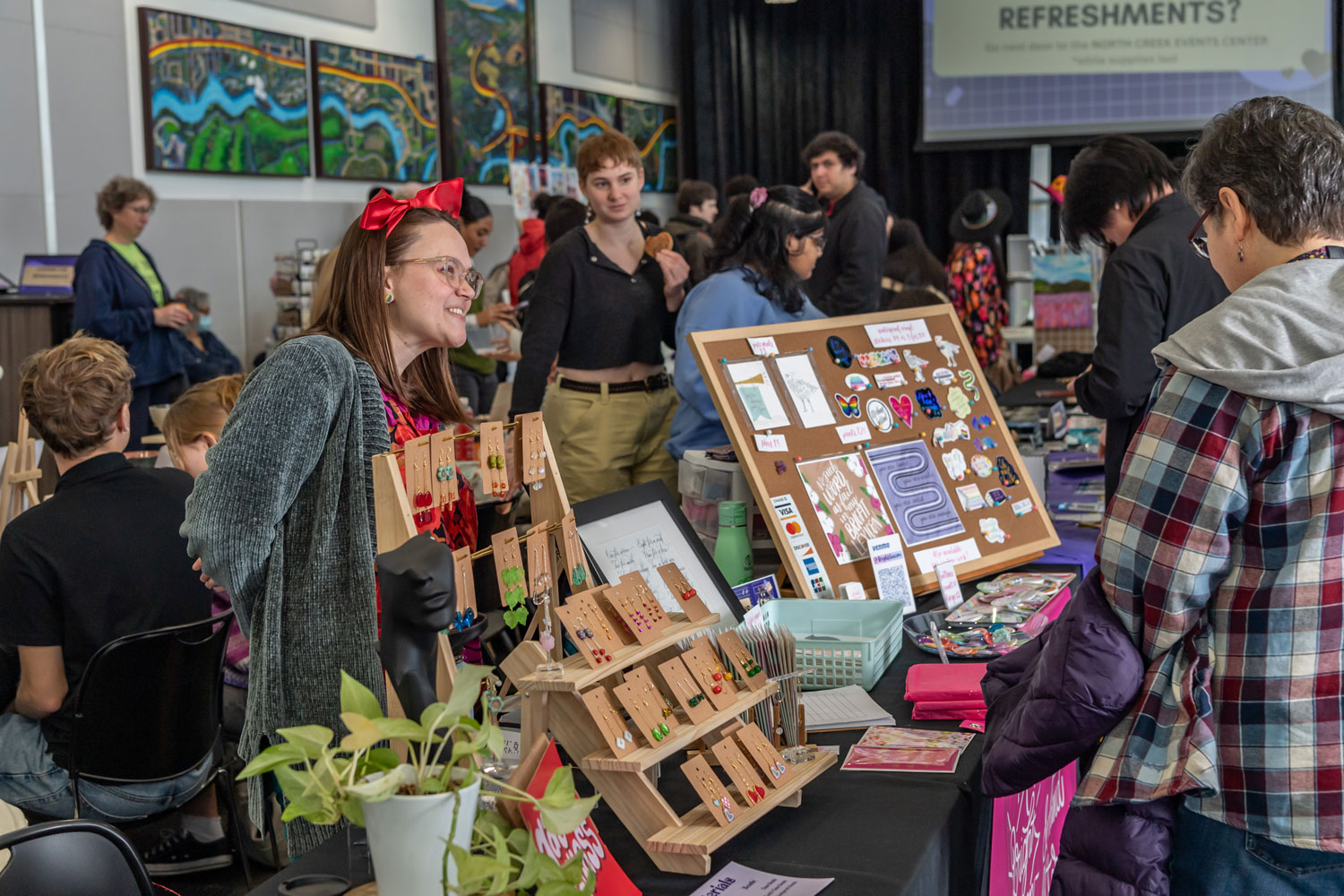
Additionally, emerging organizations such as Stitched offer hands-on creative fashion experiences. Last fall, the club hosted But It’s Balenciaga (view photos in our Oct/Nov issue), an interactive runway event which gave students the chance to innovatively design and model with pieces made from trash bags. They are also hosting a series of workshops that teach students how to use sewing machines, which are available at the MakerSpace in the Discovery building. This year, the MakerSpace was integrated into Student Engagement & Activities. They provide access to 3D printers, wood cutters and other creative tools for projects, which are all free for UW Bothell students.
Beyond the arts, Trickfire Robotics is another popular campus organization that promotes creativity through engineering and largescale networking events. By building a rover and engaging with industry professionals, students develop both technical expertise and soft skills like communication.
Looking ahead, Student Engagement & Activities will be hosting its third annual LEAD Conference on Feb. 27, which will be open soon for RSVPs. The half-day event will feature workshops across multiple career pathways, keynote speakers, and networking opportunities designed to support professional growth.
Together, these community initiatives are just some of the many spaces on campus where students can foster connection through creativity. In an age of rapidly advancing technology, it is important to set positive habits so we have the capacity to engage in dialogue and uplift one another. For more information about student organizations and events, visit GatherUWB! With an expanding range of clubs, there is a place for every Husky at UW Bothell to learn and share new ideas.







Leave a Reply